

AI boom lifts gold & silver demand, says Auckland adviser
Mon, 23rd Nov 2026 (Today)
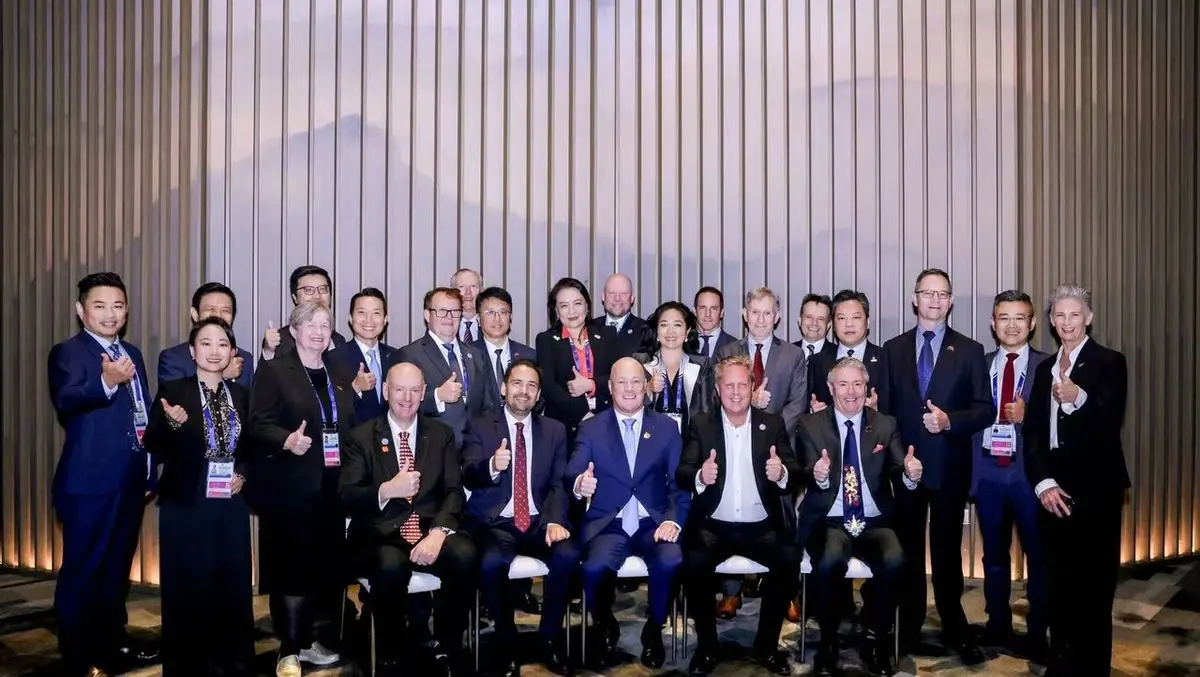
Auckland entrepreneur and international business advisor Jing Song says the rising use of artificial intelligence is drawing more attention to demand for gold and silver. She made the comments while attending the APEC CEO Summit in Shenzhen.
Song said AI's growth is shifting focus to the physical materials used in chips and electronic systems, alongside the more widely discussed issues of software, data and computing infrastructure. She also argued that New Zealand's mining sector could benefit from stronger demand for those minerals and from using AI tools in mining operations.
Song is attending the summit as Auckland Business Chamber's Honorary Advisor for Singapore and is also representing Crown Range Group, which has interests in gold mining, critical minerals, biotechnology and wine. Her remarks place mineral supply at the centre of a wider discussion about the industrial base needed to support AI expansion across the global economy.
"AI is often discussed in terms of software, data and computing power, but there is a physical supply chain behind it. The technology depends on chips, electronics and the materials used to manufacture them. Gold and silver have important applications in electronics, and the growth of AI adds another dimension to demand for these resources," Song said.
Industry figures cited by Song point to rising electronics demand for gold. According to the World Gold Council, global gold demand from the electronics sector reached 72.5 tonnes in the third quarter of 2026, up 5 per cent from the same period a year earlier.
It said investment in AI servers, data centres and high-performance computing contributed to the increase. Those uses matter because gold remains a key input in electronic components, while silver is also used in a range of industrial and electrical applications.
Mining focus
Song said the issue for New Zealand is not limited to commodity demand. AI could also change how mining companies search for deposits, model geology, and manage extraction and processing.
"AI has the potential to transform mining operations, from exploration and geological modelling through to extraction, processing, equipment maintenance, and safety. The question for New Zealand is how we can make better use of these technologies to improve efficiency and productivity in our mining sector," she said.
That view reflects a broader shift in mining, where companies are testing machine learning and automation in exploration, plant management and maintenance planning. Supporters say these systems can help analyse geological data faster and improve oversight of equipment and site operations.
For New Zealand, the debate comes as policymakers and business groups weigh how the country can strengthen its position in regional trade and supply chains linked to technology and resources. Song said businesses should pay closer attention to developments across the Asia-Pacific, where demand patterns, investment flows and industrial strategies are changing.
APEC's 21 member economies receive more than 70 per cent of New Zealand's exports, according to figures cited by Song. She also noted that the bloc accounts for 60 per cent of global GDP and 37 per cent of the world's population, making it a central market for any New Zealand business looking to scale beyond domestic demand.
Regional links
Her advisory role focuses on building trade, investment and economic links between Auckland and Singapore. In parallel, her business work involves connecting business leaders, government stakeholders and corporate decision-makers across New Zealand and Asia to support commercial partnerships and market entry.
Song is also the founder of China Girl Wine, a New Zealand brand with an international presence. She said her commercial experience has shaped her view that New Zealand companies need to be more deliberate about building networks in overseas markets.
"New Zealand has a lot to offer, but we need to be proactive in building relationships and understanding where the opportunities are emerging. Strong connections between business and government, combined with a willingness to embrace innovation, will be important in helping New Zealand businesses compete and grow across Asia-Pacific," she said.