

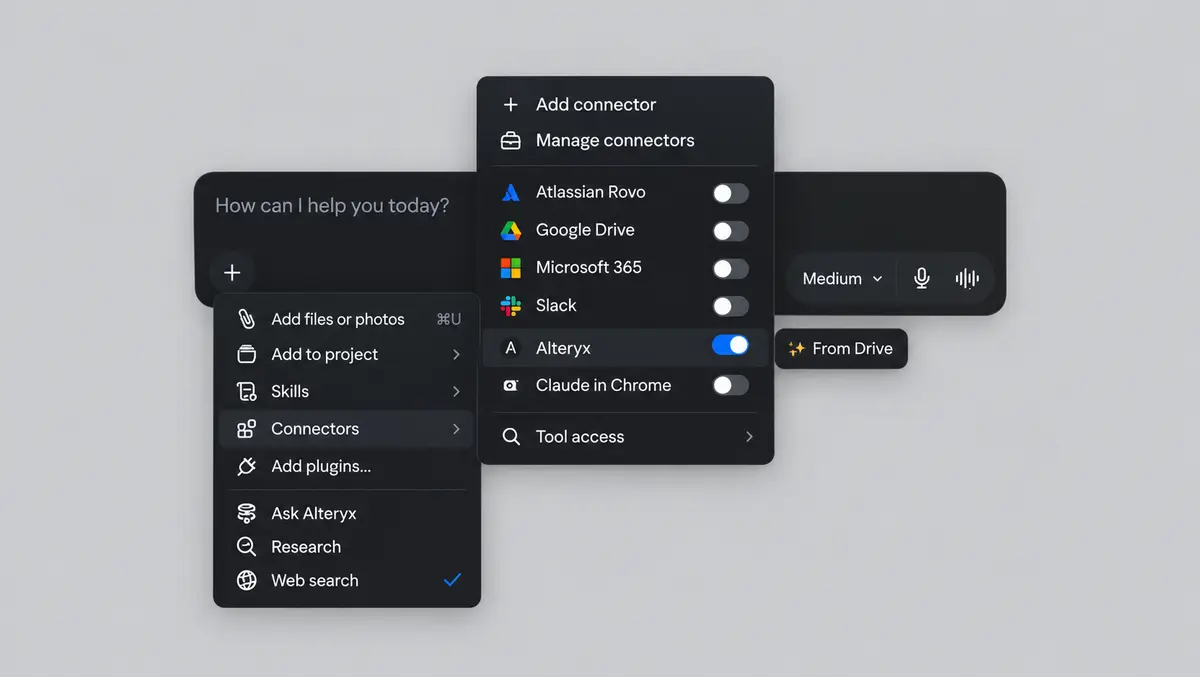
Alteryx adds governed AI tools to analytics platform
Wed, 16th Sep 2026.webp)
Alteryx has introduced new artificial intelligence features across its Alteryx One analytics platform, aiming to extend governed analytics into external AI tools and agents used by enterprise teams.
The additions include a conversational analytics interface called Ask Alteryx, an agent-building tool named Agent Studio, a ChatGPT integration, a Model Context Protocol server, and a set of Alteryx Skills for third-party agentic tools. The products are designed to let organisations reuse existing workflows, datasets, calculations, and business rules rather than recreate them for each AI deployment.
The launch reflects a broader push by software suppliers to position existing analytics and automation systems as a control layer around generative AI. Businesses have been seeking ways to connect large language models with internal data and approved business logic while limiting inconsistent outputs and governance risks.
Alteryx said its approach is based on what it calls VURA, which stands for Visible, Understandable, Repeatable, and Auditable. The framework is intended to show users where an answer or action comes from and tie AI outputs back to approved workflows and calculations.
According to research cited by Alteryx, 71 per cent of IT leaders said AI initiatives are most successful when IT and business teams work closely together. The finding points to a common challenge in large organisations, where business teams often introduce AI tools but central IT functions must provide technical and governance oversight.
Product changes
Ask Alteryx is positioned as a main interface for interacting with Alteryx One through natural language. It can review existing workflows and data, return a governed answer when one is already available, or create a new workflow when no existing logic is found, according to the company.
Agent Studio is intended to let business users turn governed datasets into conversational agents. Analytics teams will continue to control the datasets and key performance indicators that underpin the answers those agents provide, Alteryx said.
Another component, Alteryx Insights for OpenAI, is available through the ChatGPT plugin directory. The integration is meant to let business users query analyst-approved data, calculations, and workflows without opening the Alteryx platform or holding an Alteryx seat.
The Alteryx MCP Server is designed to let AI agents interact with the company's platform, locate data, and build multi-step solutions. The server inherits authentication, workspace context, role-based access controls, and permissions, according to Alteryx.
Alteryx Skills, available through GitHub, are aimed at external agentic interfaces and tools including OpenAI Codex, Microsoft Copilot, Claude Code, and Gemini CLI. They are intended to help those tools create Alteryx assets correctly while using existing business logic and permissions.
Cost focus
Alongside governance, Alteryx is presenting the update as a way to reduce AI usage costs. Running complex analytics inside its own workflows, rather than asking a large language model to perform that reasoning directly, can cut token consumption while keeping outputs repeatable, the company said.
It cited a case involving NextWave, which it said achieved a 20x reduction in large language model token consumption during a finance reconciliation process between front-office and back-office data. In internal testing, Alteryx said combining a large language model with an existing Alteryx workflow reduced token consumption by up to 93 per cent and increased speed by up to 85 per cent for tasks involving raw, ungrounded data.
For tasks involving clean, grounded data, token costs were reduced by up to 83 per cent and speed increased by up to 65 per cent, according to the company. The figures underline a growing commercial argument in enterprise AI deployments: reducing the amount of work handed directly to foundation models can lower usage costs as well as improve consistency.
The issue has become more prominent as companies try to move from pilot projects to wider operational use. Early deployments often focused on experimentation, but larger roll-outs have drawn attention to recurring model charges, auditability, and the risk of conflicting outputs across departments.
Alteryx, which says it serves more than 8,000 customers worldwide, including more than half of the Global 2000, is seeking to use that shift to deepen its role in corporate data workflows. Customers collectively run more than 380 million workflows on its software each year, according to the company.
A regional executive framed the launch around operational use rather than experimentation. "Indian enterprises are moving rapidly from AI experimentation to embedding AI into everyday business processes. As adoption scales, the priority is not simply more AI, but trusted AI outcomes-ensuring that decisions are grounded in the right business context, governed appropriately and can be confidently acted upon. Alteryx helps organizations bring governed analytics and trusted business logic into the AI environments their teams already use, supported by an AI governance framework that makes AI visible, understandable, repeatable and auditable (VURA). For Indian businesses, these capabilities provide a practical foundation to scale AI responsibly while improving efficiency, accelerating decision-making and delivering measurable business value," said Sabya Sen, Vice President, IMEA & APAC, Alteryx.