

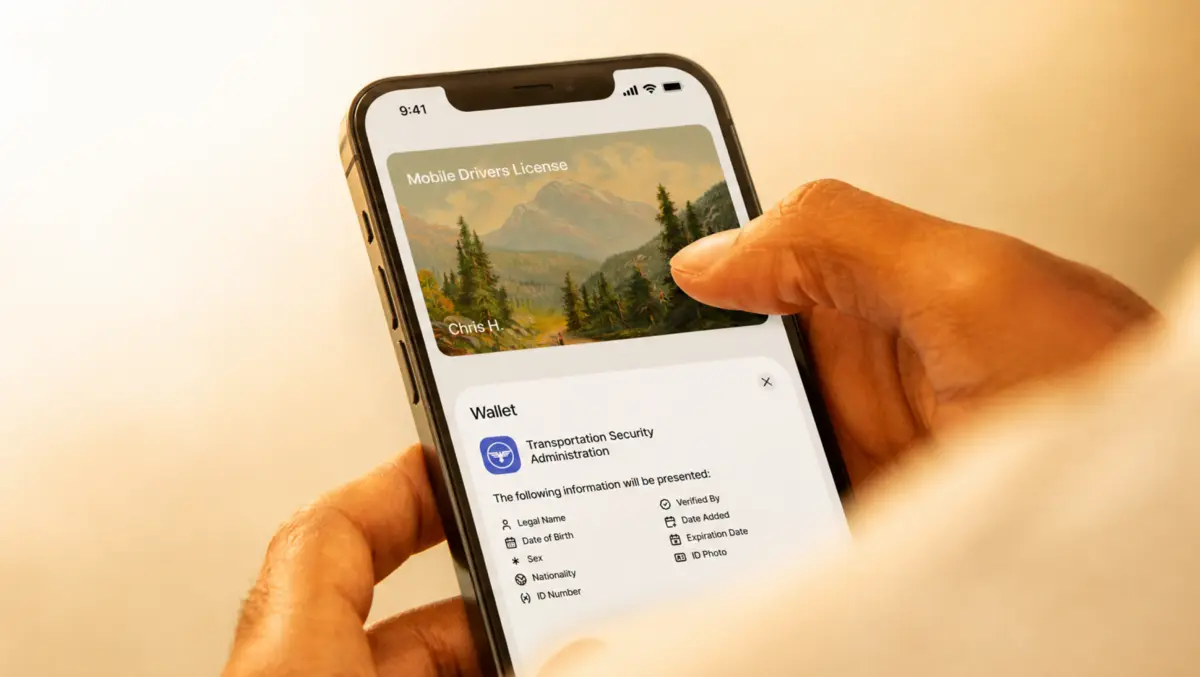

Authsignal has launched Digital Credential Verification and has been listed on the New Zealand Government Marketplace under the Digital Identity channel.
The product is designed to let businesses accept and verify digital identity credentials held in Apple Wallet, Google Wallet, government wallets built on recognised standards, and other compatible digital wallets. It provides a single integration point for organisations that need to work with different wallet providers.
Credential support
It supports the ISO mdoc format used for driving licences and photo identification documents in several markets. The system works on desktop and mobile devices, including when a credential is presented on the same device or across different devices.
Businesses can request only the data fields they need from a credential. That means a check such as whether a customer is over 18 can be completed without disclosing the person's full identity.
The launch comes as governments in several regions move towards wider use of digital identity documents. In New Zealand, the Digital Identity Services Trust Framework has taken effect. In the United States, more than 20 states support mobile driving licences, and European Union member states are required to offer digital identity wallets under eIDAS 2.0.
The service also includes biometric holder verification through Authsignal's biometric vendor marketplace. At launch, the process uses iProov for liveness verification by matching a live selfie against the portrait contained in the credential.
This is intended to help businesses determine whether the person presenting the credential is its legitimate holder, including in cases involving stolen devices, shared wallets, or synthetic media attacks. According to Authsignal, portrait images are processed transiently and are not retained after verification.
Authsignal's listing on the New Zealand Government Marketplace places it within a procurement channel covering Authentication Services, Binding Services, Information Services, and Verification Support Services. The listing makes its services available to New Zealand government agencies through the state procurement system.
Market shift
The move reflects growing institutional interest in digital identity services in New Zealand. Digital driving licences, the digital Kiwi Access Card, and Business Director credentials are among the documents expected to emerge in the near term.
According to Authsignal, it processes more than 12 million authentication events a month for organisations operating across 17 countries. Its product set includes passkeys, adaptive multi-factor authentication, biometric authentication, and verification tools that sit on top of existing identity systems.
Authsignal also highlighted its compliance and industry certifications, including SOC 2 Type II, ISO 27001, and FIDO. It said analyst firm KuppingerCole named it a 2025 Rising Star in customer identity and access management and passwordless authentication.
Biometric verification is increasingly becoming part of the discussion around digital credentials because possession of a wallet alone does not confirm who is presenting it. That is one reason firms in the sector are trying to tie wallet-based credentials to live user checks at the point of transaction.
iProov, which provides the biometric verification used at launch, said its technology is already deployed by government and public sector bodies including the US Department of Homeland Security, the UK Home Office, the UK National Health Service, the Australian Taxation Office, and GovTech Singapore, as well as by banks.
Verification flow
Justin Soong, Founder and Director of Product, Authsignal, outlined the company's position on product design and customer adoption.
"New technology only succeeds when it meets customers where they are. We proved that with passkeys, and we're applying the same principle to digital credentials: drop-in integration, the right moment in the journey, and a user experience that never gets in the way," said Justin Soong, Founder and Director of Product, Authsignal.
"Our Digital Credential Verification suite is built on that principle: reducing integration complexity and replacing it with the flexible drop-in patterns our customers expect. Being listed on the NZ Government Marketplace under the new Digital Identity channel is recognition of the work we've done to be ready for this moment," added Soong.
Andrew Bud, Founder and Chief Executive Officer, iProov, described the role of biometric checks in digital credential use.
"A digital credential is only as trustworthy as the person presenting it," said Andrew Bud, Founder and Chief Executive Officer, iProov.
"As organisations increasingly rely on digital credentials to make identity verification more secure and convenient, they also need confidence that every credential is being presented by its legitimate holder. Our partnership with Authsignal brings government-grade biometric assurance into the digital credential verification flow, ensuring businesses and their customers can trust the process from end to end," added Bud.