

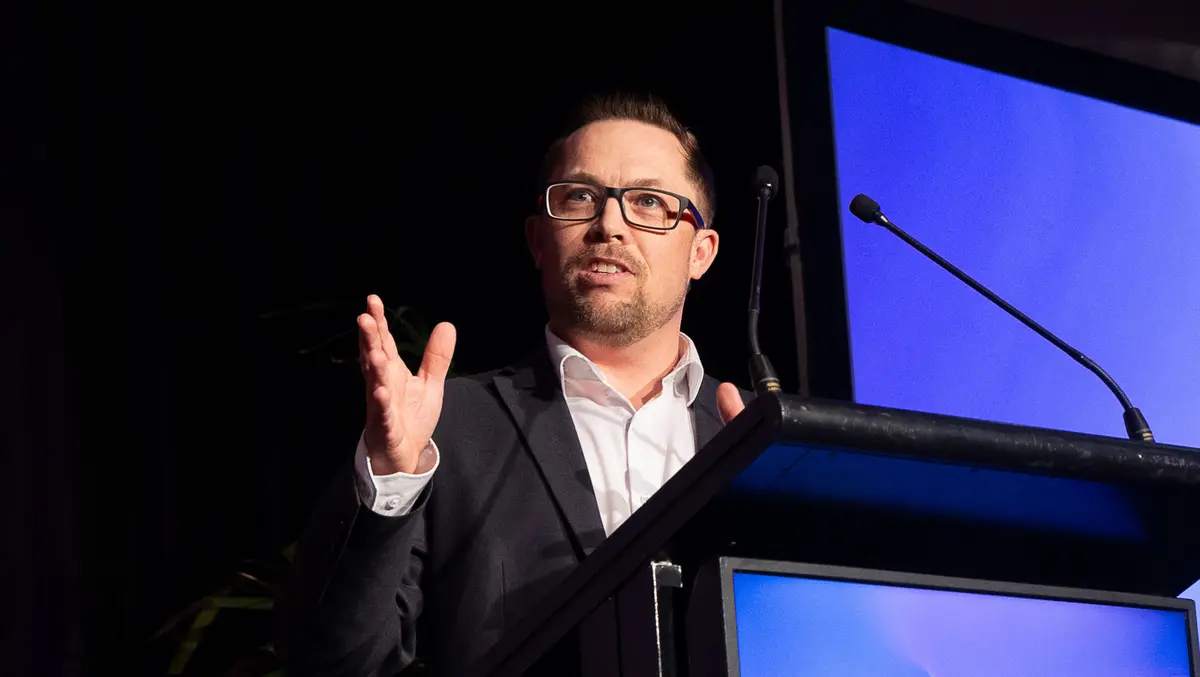
Champion Flour Milling finance chief on disruption
Fri, 28th Aug 2026
Champion Flour Milling Ltd's GM Finance and Commercial Stephen Morgan's career has taken him from mobile phones and L'Oréal to Tegel, Coca-Cola and Champion Flour Milling.
Throughout his career, one theme has remained constant: a passion for helping businesses make better decisions and create sustainable value.
In a wide-ranging interview at a recent finance Brightstar event, the 2025 CFO of the Year shared valuable, honest lessons from navigating disruption, making difficult commercial decisions and evolving finance into a genuine business partner. We share five of our favourite Q&As:
Was your diverse sector experience by design, or did you just keep following what was interesting?
Stephen described his career path as partly intentional and partly shaped by opportunity. "It was sort of by design - and not," he said. After an early general management role running a mobile phone business, he moved into finance at L'Oréal, where he spent 10 years in an environment he describes as exceptional for developing people. "They heavily invested in people," he said. "They had great processes, great systems, great people - talent everywhere, and lots of opportunity."
At that stage, Stephen's personal "big rock" was to reach Finance Director at L'Oréal UK before relocating to New Zealand for lifestyle reasons and taking on a senior role here. "London was a bit of a rat race," he said. "People move here for lifestyle, and that's exactly what I did." Having worked in a large global organisation, he was keen to experience a more agile New Zealand business where decisions could be made closer to the customer and where leaders had scope to be more entrepreneurial.
That led him to Tegel, which was a significant culture shift after L'Oréal. "I said to the recruiter, 'I want to work for a New Zealand company,'" Stephen recalled. After the structure of a large global business, Tegel felt very different, but it also gave him the chance to be closer to the business, get involved across functions and apply a more entrepreneurial mindset. A later move to Coca-Cola broadened that experience further, shifting his business partnering focus from sales into operations and giving him valuable exposure to manufacturing.
By the time he joined Champion, Stephen had built a reputation for being highly commercial and not a traditional finance leader. "I'm not your traditional finance person," he said. "I don't like doing the same thing all the time - I like thinking outside the box, influencing, negotiating and turning insight into action." Champion was navigating a period where sharper commercial focus, better insight and strong cross-functional support were increasingly important. For Stephen, it was an opportunity to help build on the business's strengths, support better decisions and contribute to more sustainable performance, while bringing together his broad experience across general management, sales partnering, operations and finance leadership.
What does the first 24 hours look like for a finance leader during a genuine operational emergency?
Stephen has navigated several periods of disruption during his tenure at Champion, with his leadership tested early. Just six months after joining, he found himself running the business for nine months during an exceptionally volatile period. "It was a baptism of fire," he recalled. At the time, Champion was dealing with the Russia-Ukraine war, which had driven significant grain price volatility, alongside a failed South Island harvest and a major ERP implementation. Then, in January 2024, a silo collapsed at Champion's Christchurch site, creating immediate operational, safety, customer and commercial challenges.
For Stephen, the first priority has always been clear. "You've always got to have the customer at heart," he said. "The customer always has to come first." The immediate question was whether Champion could continue supplying product. "Can you still get product to the customer?" became the key test in those first critical hours.
With Christchurch capacity constrained, the team had to move quickly. Some production was moved to their other mill in the North Island, alternative storage was secured for grain and the business had to work through the complexities of grain blending and maintaining product consistency.
Stephen's role then shifted to helping articulate the full commercial impact of the incident. "My role really was to articulate, measure and recover the loss for the business," he explained. That meant looking well beyond the obvious physical damage. The team had to quantify the cost of offsite storage over time, additional people resources, production balancing between sites, supply chain disruption and gross margin impacts caused by changes in material mix.
It was not a simple claim where "something's happened, something's broken, here's an invoice." Instead, finance had to map "the complex, commercial consequences" that flowed through the business. The process became a major focus for Stephen over an extended period, but it also proved critical by protecting customer supply and maintaining business continuity through a difficult period.
What does business partnering look like for you at Champion?
Stephen said finance has "changed massively", moving "from controllers to partners". For him, a business partner is a "co-pilot of the business".
That means finance leaders need to be comfortable across the organisation, including sales, HR, procurement and operations. His team needs to "completely understand the operational landscape", get onto the shop floor and, most importantly, "deliver outcomes".
Stephen believes the traditional finance role of "value preservation" is no longer enough. "You don't have to be a cog in a big machine," he said. "You can be the engine that drives outcomes." For him, finance professionals need to be "change agents", "enablers for the business", storytellers and influencers who help create value, not just report on performance after the fact.
Stephen uses the Four Faces of the CFO framework, a Deloitte model, as a guide to building a strong team. The model captures this broader role through four responsibilities: steward, operator, change agent and strategist. Stephen describes the steward and operator roles as the foundation of finance: protecting the assets of the business, maintaining strong controls, and ensuring core processes such as reporting, budgeting and forecasting work well. "You still have to get that right," he said, because finance can lose credibility quickly if the basics are not done properly. But he believes the real opportunity is for finance leaders to lift themselves into the top half of the model, becoming catalysts for change and strategic navigators who bring commercial acumen, storytelling, influence and a growth mindset to the business.
Linked to this, Stephen also spoke about the importance of moving beyond reporting into action. He described the finance "reporting loop" as information being recorded, analysed, interpreted and then turned into a recommendation. The risk, he said, is that finance teams can get stuck "just churning out reports". His challenge to finance professionals is to keep asking: "What does this report tell me, and what am I going to do about it?" For Stephen, that focus on "what, so what, what's next" is what helps finance move from the bottom half of the model into the more strategic, value-creating roles of catalyst and navigator.
Stephen framed today's operating environment simply: "Disruption is the norm." His response is not to treat volatility as an exception, but to keep an unrelenting focus on the goal, continue working on the big rocks, and use data to build understanding and clarity when conditions are uncertain.
Stephen also sees finance as uniquely placed to help organisations navigate volatility because of its enterprise-wide view of data. "We are in a very privileged position in finance," he said, "because we have access to all of the data - all of the costs, all of the trends, and we know exactly what is going on." For him, the value of that position is not in simply holding the information, but in using it to build understanding, create clarity, shape a plan and keep the business agile when conditions change.
What does it take to influence at CEO and leadership team level?
Stephen believes effective influence starts with mindset. "I've always seen myself as the same level as whoever I'm reporting to," he said. For him, that does not mean overstepping; it means having the confidence to think broadly, understand the business beyond finance and contribute as a genuine leadership partner.
Trust is central to that. Stephen highlighted three ingredients: "trust", "consistency" and "commercial courage". He said finance leaders need to be "comfortable with the uncomfortable" and willing to have tough conversations, while remembering that senior leaders are still people. Building credibility comes from showing up consistently, speaking their language and bringing practical solutions.
One practical habit Stephen uses is to frame issues through "the what, the so what and the what's next". He said leadership teams do not just need to hear that there is a challenge; they need to understand what it means and what the business should do about it. "If you come to those leaders with solutions, you're going to build that trust," he said. For Stephen, influence is earned by combining clear insight with action, accountability and the courage to make a recommendation.
What are two or three things you'd suggest to people wanting to take the next step?
Stephen's first piece of advice is to "invest in yourself" and understand yourself as a person. He emphasised that "it's not just IQ - EQ is also very, very important", highlighting authenticity, curiosity, inquisitiveness and empathy as important leadership qualities.
For Stephen, those human skills are becoming even more important as technology reshapes finance. "Computers can't do that - that's us," he said, referring to qualities such as authenticity, curiosity, empathy and the ability to influence. His advice is to develop those skills deliberately, because they are what help finance leaders build trust, lead change and create value beyond the numbers.
He also encouraged finance professionals to build their brand by being close to the business. "Be where the work is," he said. For finance business partners, that means being visible with the teams they support - in the office, on the shop floor and close enough to understand the reality behind the numbers. His advice was equally simple for people looking to build credibility: "If you want to really build your career and build a brand, be present."
Finally, Stephen advised people not to become distracted by their peers' career progression. He admitted he had done this himself in the past, but said the answer is to "focus on yourself" and your own "personal growth".
We are delighted to hear Stephen Morgan again at the CFO Summit in September, where he will be on the panel: Digital trust and cyber resilience: what does it mean and why does it matter? It is one panel finance leaders will not want to miss in 2026.
CFO Summit | 8 Sept 2026, NZICC, Auckland – Learn more.
