

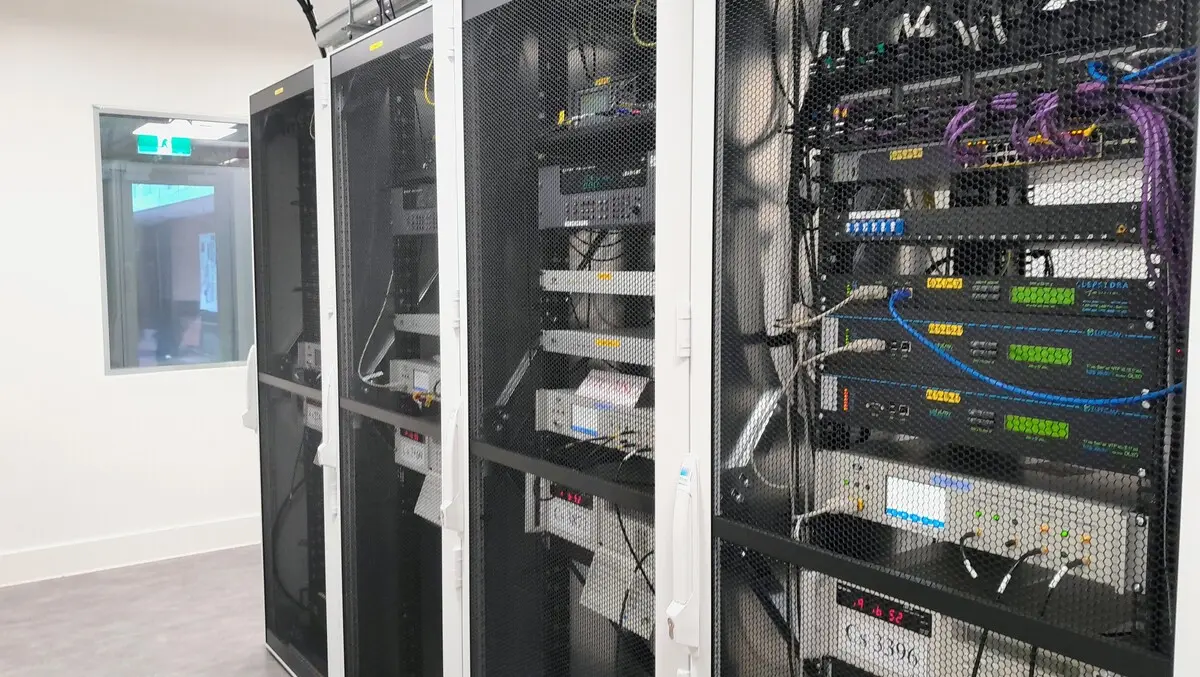
Chorus launches TimeSync precision timing service in NZ
Wed, 5th Aug 2026
Chorus has launched TimeSync, a wholesale network-based precision timing service in New Zealand.
The telecoms infrastructure group says the product is designed to give organisations access to accurate timing over its nationwide fibre network, offering a domestic alternative to signals commonly drawn from satellite systems such as GPS.
Timing systems support a wide range of digital operations that depend on devices and networks staying in step. In sectors including finance, electricity, mobile communications, transport, healthcare and emergency services, even small discrepancies can create operational problems, affect records and disrupt service coordination.
Chorus is developing the service with Nokia and the Measurement Standards Laboratory, the body responsible for maintaining New Zealand's official time standard. The arrangement links Chorus' fibre network to Coordinated Universal Time derived from MSL's atomic clocks.
Atomic clocks provide the reference point for national and international timekeeping. By distributing that signal through a terrestrial fibre network, Chorus is aiming to add another source of timing infrastructure within New Zealand rather than relying solely on satellite-based systems, which can be exposed to interference, extreme weather and wider geopolitical disruption.
Martin Sharrock, Chief Technology Officer at Chorus, said the need for more resilient timing systems had become more urgent after overseas network disruptions highlighted weaknesses in internationally dependent infrastructure.
"Many services that keep our country running rely on digital timing provided by global satellite systems like GPS. While they have served us well, they can be vulnerable to interference, severe weather events, geopolitical impacts and other external factors. Having a terrestrial, nationally distributed source of precise timing built and operated right here in New Zealand helps strengthen our national security and resilience, while providing greater diversity and redundancy in our timing infrastructure," said Sharrock.
Critical systems
TimeSync will support uses including timestamping financial transactions to the millisecond, synchronising electricity networks and power stations, supporting mobile connectivity, coordinating transport systems and enabling communications across healthcare and emergency services.
Those use cases reflect a broader shift in communications infrastructure, where timing has become more visible as digital systems grow more interconnected. Mobile networks, cloud services, automated industrial systems and real-time applications all rely on accurate synchronisation between sites and devices.
Nokia has been selected as the technology partner for the rollout, based on its work on network timing and synchronisation standards and its experience across telecommunications, utilities, financial services and data centres.
Adrian Heley, Head of Oceania at Nokia, said the project would help improve network coordination.
"The future of digital infrastructure depends not only on how fast data moves, but on how precisely networks and systems work together. By combining Chorus' nationwide fibre footprint with Nokia's expertise in precision synchronisation, we are helping strengthen the resilience of New Zealand's critical infrastructure and create the foundation for the next generation of connected, AI-enabled and data-driven services," said Heley.
Official time
MSL's involvement gives the service a direct link to New Zealand's official time source. The laboratory maintains the national standard using atomic clocks, which measure time through a stable atomic frequency that defines the length of the second.
That function is often invisible to end users, but it is central to trusted records, synchronised networks and the operation of distributed digital systems. A national timing source delivered through fixed infrastructure could be particularly relevant for organisations seeking stronger assurance over service continuity.
Dr Peter McDowall, Director and Chief Metrologist at MSL, said the project would expand how accurate time is delivered across the country.
"Precise timing is the invisible heartbeat keeping our modern networks synchronised, trusted and running. MSL is pleased to be working with Chorus on new ways of delivering accurate and trustworthy time over its fibre network and strengthening New Zealand's timing capability and resilience," said McDowall.
The first phase includes integrating an atomic clock and deploying timing and synchronisation infrastructure across the Chorus network. The service will be introduced progressively, beginning in Wellington, Auckland and Christchurch.
Chorus plans to sell TimeSync both as an add-on to existing fibre products and as a standalone service. It says its existing national fibre footprint should make adoption easier for mobile operators and other businesses that need a timing source without building separate systems of their own.
Sharrock said Chorus' network design was well suited to distributing a consistent timing signal nationally.
"As the operator of the country's largest fibre footprint, Chorus already underpins much of our national digital infrastructure. Our network is designed in a way that allows precise timing to be delivered consistently across the country. This reduces complexity, avoids unnecessary duplication and makes it easier for mobile operators and businesses to adopt the service," said Sharrock.
TimeSync is not due to begin rolling out until early 2027.