


Elix and the University of Vienna have signed a joint research agreement on AI-based drug discovery focused on difficult cancer and epigenetic signalling targets.
The collaboration combines Elix's chemoinformatics and AI-led molecular generation with the university's research in structural dynamics and nuclear magnetic resonance, or NMR, analysis of biomolecules. It will focus in particular on intrinsically disordered proteins, a class of targets that has often proved difficult to address with conventional drug discovery methods.
Drug developers have increasingly turned to artificial intelligence to identify promising compounds from large candidate pools, in part because standard screening and optimisation processes are slow, expensive and often yield low success rates. In this project, the partners aim to combine computational design with experimental atomic-resolution data to improve the selection and refinement of candidate molecules.
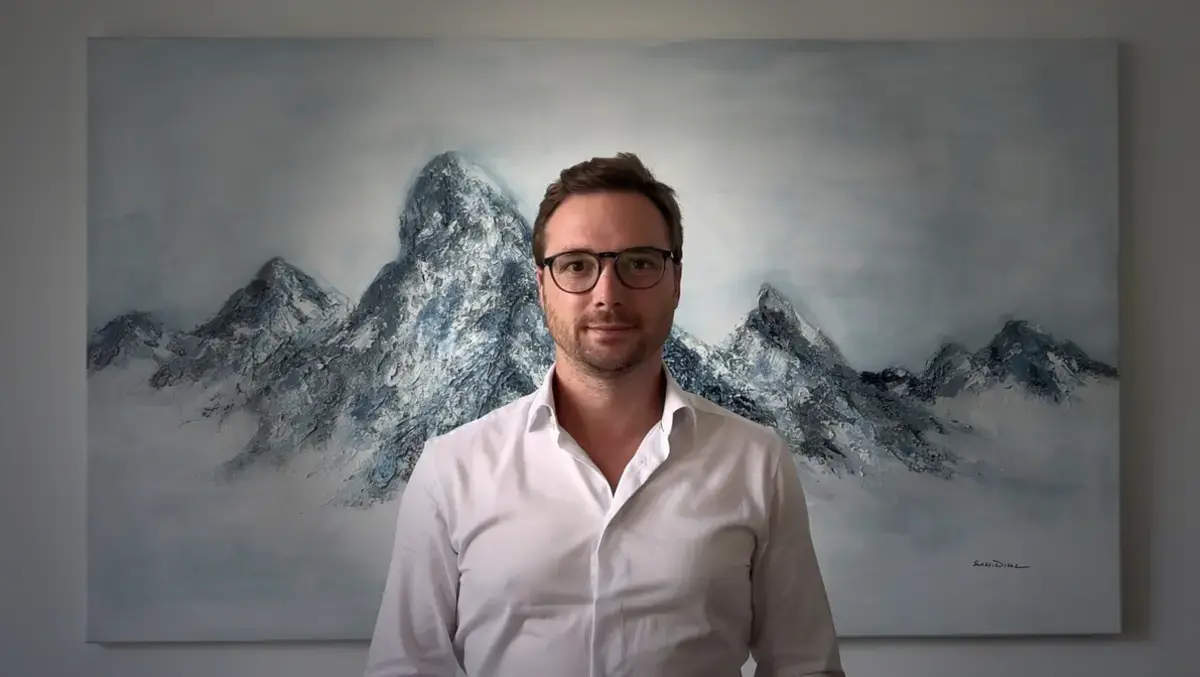
At the University of Vienna, the work will be led by Associate Professor Julien Orts. His research group studies the structures, dynamics and interactions of biomacromolecules and has developed methods including INPHARMA, used to validate small-molecule binding modes, and NMR2, an approach for automated determination of protein-ligand structures.
The lab also uses eNOE distance measurements with 0.1 Å accuracy to resolve protein ensembles, providing thermodynamic information relevant to structure-based drug design. That technical foundation is expected to support the joint effort to study targets whose behaviour changes over time and is not easily captured by static structural models.
Tokyo-based Elix works with pharmaceutical companies, academic institutions and biotechnology groups on drug discovery projects using machine learning and related AI methods. It also offers its own software platform, Elix Discovery, which supports both ligand-based and structure-based drug design workflows.
The platform includes predictive modelling, compound profiling and structure generation tools through a graphical interface designed for medicinal chemistry researchers. It also supports methods such as pharmacophore modelling and docking simulation, which are commonly used to explore how small molecules may interact with biological targets.
Research focus
The project aims to design novel compounds against targets often described as "undruggable". These include intrinsically disordered proteins and proteins involved in epigenetic signalling and cancer, where unstable conformations or complex interaction patterns can make the search for a drug candidate especially difficult.
Rather than relying on a single modelling approach, the partners plan to combine AI-generated molecular proposals with validation from NMR-based experimental methods. The approach reflects a broader trend in drug discovery, as companies and academic groups seek to connect data-driven design tools more closely with laboratory evidence.
The agreement also extends Elix's pattern of research partnerships with outside organisations. It has previously worked with universities and biotechnology businesses as it builds both software and collaborative research lines around AI-assisted drug development.
For the University of Vienna, the agreement places structural biology research within a programme directed at compound design as well as target understanding. It also gives the Orts group an industry partner for work applying detailed protein dynamics data to medicinal chemistry questions.
Associate Professor Julien Orts said: "We are thrilled to partner with Elix to bridge the gap between advanced structural biology and artificial intelligence. My laboratory has always been driven by the desire to push the boundaries of what NMR can achieve in drug discovery. By combining our ability to resolve protein dynamics at atomic precision with Elix's sophisticated AI-driven generation, we can move beyond static structures and begin to target the complex, transient behaviours of proteins that were once considered out of reach. This synergy is exactly what is needed to accelerate the discovery of transformative medicines for the next generation."
Shinya Yuki, Chief Executive Officer of Elix, said: "At Elix, our mission is to rethink drug discovery by bridging cutting-edge AI with experimental innovation. Collaborating with the group led by Associate Professor Julien Orts at the University of Vienna allows us to pursue this mission on a global scale, uniting expertise in AI drug discovery with world-leading structural biology. We believe this partnership will open new possibilities for targeting diseases that have long remained beyond the reach of traditional drug discovery."