

Fresh perspective: New Gentrack CTO on AI-driven utility future
Thu, 23rd Jul 2026
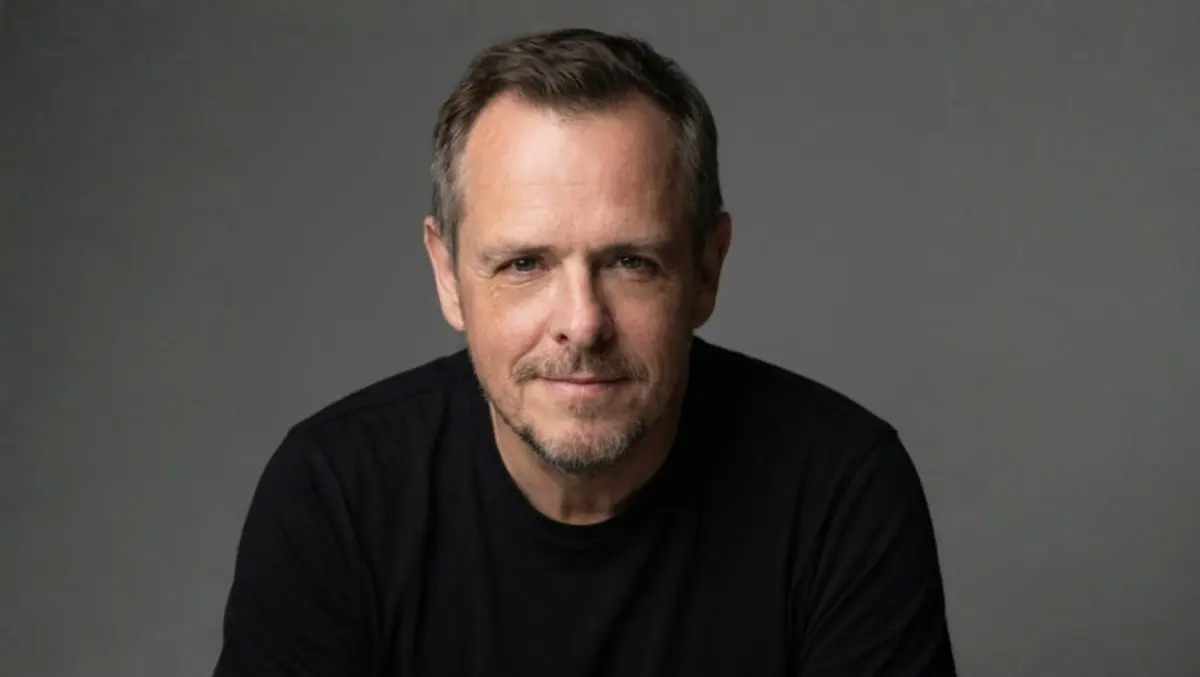
In early June 2026, Gentrack announced the appointment of senior executives to accelerate its growth strategy. Among them is Scott Chilton, who steps into the role of Chief Technology Officer, based in the United Kingdom but already deeply immersed in the company's Australasian operations. Chilton joins a leadership team laser-focused on transforming how utilities serve their customers in an era of rapid technological change, and on an exhaustive visit to Antipodean utilities, he's been impressed.
But first, "The interesting thing is that I'm not from the utilities sector," he said. "And that in some ways is my superpower."
That's because, Chilton continued, he brings an entirely fresh perspective to the role, asking questions which may seem naive but quickly drive invigoration for those more embedded, prompting leaders and teams to reassess long-held assumptions. "Though," quipped the affable Chilton, "It does also result in the occasional eye-roll."
Gentrack is a specialist cloud-first technology provider that delivers innovative cleantech and customer engagement solutions to energy and water utilities worldwide. Its flagship G2 platform manages customer lifecycles from acquisition and onboarding through meter data management, billing, payments, debt management, forecasting, and analytics. Gentrack software is used by energy and water companies around the world and in ANZ, where it serves established retailers and innovative up and comers.
All about customers (and engineering)
Where Chilton earns immediate cred is in his 'somewhat-unusual-for-an-engineer' approach of taking a highly customer-centric approach to technology and product development. "In SaaS businesses, you have to be careful," he set out. "One change can knock everybody out. The CI/CD processes have to be in place; you need a mature engineering mindset, where checks and balances are as automated as possible to be as least disruptive as possible to customers."
And, he added, in heavily regulated environments, "I've learned that that fast pace isn't always welcome. You have to build confidence with customers and not break things."
Describing his role as focused on 'the product and engineering side of thing', Chilton said his approach dovetails well with the company's track record. "We've built great products with our customers over a 30-plus year journey. And [now] we're transitioning into being a product-led as a business, offering our clients greater levels of experience, bringing AI to the table. To do that, we've got to think product first. We've got to learn from our customers."
It may seem absurd to those who haven't encountered the phenomenon, but (software and other) engineers quite often develop products while studiously avoiding customers. Chilton himself relates a prior experience where, he said, 'nobody ever spoke to a customer' (notwithstanding Henry Ford's assertion that customers would demand a faster horse).
Be that as it may, Chilton and Gentrack address customers that know what they want, and what they need. The primary driving factor, he said, is a simple one: "Cost to serve." That's reflected in what utility customers themselves want: a seamless, preferably practically invisible engagement with their service provider. Set and forget; as little engagement as possible, with water that just flows and power that comes on without support calls. The biggest differentiator for a utility is this, along with the cheapest possible rate - after all, electrons are entirely fungible.
Frictionless efficiency
So, Chilton's mission is clear. Drive down cost, drive up competition. AI of course is a bunch of keys ready to unlock new efficiencies, and that's at least part of what he's examining. "AI'S got a habit of amplifying anything, but I've seen so many people rapidly bring stuff to market that no one wants," he said. " So this means you have to be connected to customers and what they really want. And in some ways, you can give them what they want inexpensively by leveraging AI tools…which I firmly believe are the future."
It's not by accident that he's used 'tools'. Whether a spade or an AI agent, a tool is not an outcome, but (part of) a means to an end. Proper use delivers valuable outcomes.
"As we start to leverage more agentic AI, the goal is finding better ways to serve customers, perhaps where they aren't clicking through tabs and screens and dropdowns and fields to find what they need. Where an agent looks at high volume journeys and extrapolates it away, putting the cognitive load back into AI. That's where the excitement is for me."
Through, Chilton again stressed, the all seeing eye of 'cost to serve'. "This is what I'm thinking about; but, I'm still new to the domain, so these are really the things 'early in my head'. And I want to move from reactive to proactive AI; right now we can query what's going on with [someone's] bills, that's reactive. Proactive is knowing about [an issue] before the customer, and we can stop it happening in the first place, prevent those anomalies so you never get the call in the first place."
A mature market
Coming back to his experience engaging with utilities customers across New Zealand and Australia, Chilton said he's impressed not only with the efficiency in serving customers, but the forward-looking approach to infrastructure.
"It just feels like you're way more advanced here," he observed, noting that ANZ utilities are leading in giving consumers control over distributed energy resources like solar, batteries, and home generation, without forcing them into complex management. Time-of-use tariffs and dynamic pricing (which drive 'human automation'), he said, are more mature in the region, improving alignment between what customers pay and what utilities actually incur.
Furthermore, he pointed to maturity in electric vehicles, with ANZ players thinking creatively about vehicle batteries as grid assets. Chilton sees this as a powerful advantage: "I'm learning a lot more from what's happening with utilities in the south than anywhere else in the world at the moment," he said, adding that ANZ has much to offer as a proving ground and early-adopter market, extracting lessons that Gentrack can apply elsewhere.
Of course, he smiled, "I am a brand new CTO so right now I'm sort of lifting up the rocks to see what headaches I'm going to have. I have understand where we are as a business and how we can move at that AI speed without putting customers or Gentrack itself in any jeopardy."