

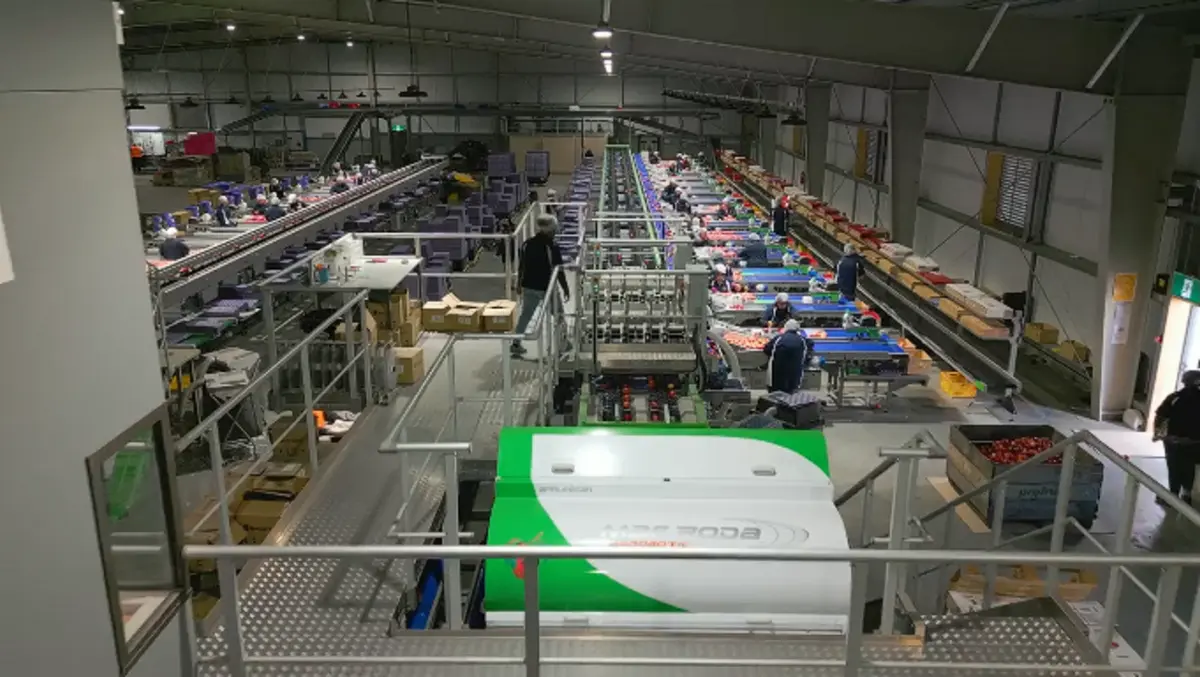
Hawke's Bay orchards upgrade packhouses after storms
Fri, 26th Jun 2026
Omahuri Orchard and Kelston Orchards have upgraded fruit packing and sorting systems in Hawke's Bay, reflecting wider efforts to protect output after severe weather disruption in one of New Zealand's main horticulture regions.
The two family-run businesses are using post-harvest and packhouse equipment supplied by MAF NZ as growers contend with more volatile weather and rising demand for apples in export markets.
Horticulture has become more important to New Zealand's export economy, with apples and kiwifruit among the main drivers of growth. Hawke's Bay remains central to that trade despite the damage Cyclone Gabrielle inflicted on orchards, homes and infrastructure across the region.
Omahuri Orchard, run by the Fulford family for more than a century, operates across four sites in the Hastings and Havelock North area. The business spans more than 55 hectares, grows about 36 fruit varieties and packs more than 2,740 tonnes a year.
Most of that volume is apples for export, with about 2,200 tonnes shipped overseas. Another 540 tonnes of cherries, plums, nectarines and peaches go to the domestic market.
Peter Fulford, Director of Omahuri Orchard, said the business came through Cyclone Gabrielle with limited direct damage, losing about 100 trees and enduring a 12-hour power cut. In the years around that event, the orchard invested in grading and inspection systems as part of a broader response to weather and biosecurity risks.
"We installed a MAF Roda grader, which has been fully operational since the start of the 2019 season. Before this, our packhouse relied heavily on manual labour, with people grading, sorting and packing the fruit. While effective, this approach allowed for human error and inconsistency.
"We now use internal defect sorting technology to 'look inside' the fruit, assess internal quality and detect issues that are not visible externally. We also use Globalscan for external defects such as wind rub, bruising, sunburn and other cosmetic damage. That means we can intercept and remove defective fruit early in the process, helping to protect quality and maintain consistency.
"As an automation-ready orchard, with machinery such as hydro ladders instead of traditional ladders, our technology and equipment enable us to consistently produce high-quality fruit while efficiently handling multiple sizes, grades and packing speeds at the same time. This precision and flexibility allow us to maximise throughput without compromising quality, supporting stronger returns and improved operational efficiency across the business. We also have better visibility of our production and packhouse performance than in the past, giving us stronger insights across the season. This helps us make more informed decisions around grading, quality and throughput, ensuring we can consistently meet customer requirements."
Another example from the region is Kelston Orchards, a family-owned apple grower, packer and seller that has operated for more than 40 years. The business rebuilt its packhouse after concluding its older equipment was no longer adequate for the volume it was handling.
Tony Harington, Owner of Kelston Orchards, said the business had been running its packing operation for 60 to 70 hours a week as export demand increased. It then installed a new grading and packing system and built a larger cool store.
"It was a major upgrade to rebuild our packhouse facility and install a turnkey, state-of-the-art MAF Roda system designed to maximise value and pack multiple grades out of a bin. We built a large new cool store at the same time. More than half of the apples processed by Kelston Orchards are our own fruit, and the 2,500-square-metre packhouse includes a multi-lane feeding and optical grading system able to handle up to 60 bins per hour.
"We installed a six-lane pre-sort system feeding onto a four-lane commit-to-pack line, complete with all the conveyors and equipment for handling the boxes. With our old and new sizers, we have the versatility to do what we want.
"The whole upgrade had a major impact on productivity, and we are now packing almost half as much again in two-thirds of the time. With 60 people in the packhouse, we can put out as many as 10,000 cartons a day. My parents had a packhouse from which we packed 15,000 to 20,000 cartons a year, and we have just finished a season in which we packed 635,000. When we are not packing apples for export, the packhouse supports local summer fruit growers."
Weather pressure
For both businesses, weather remains the defining operational risk. Kelston Orchards lost only a few trees in Cyclone Gabrielle, according to Harington, but half of its crop for the year.
That contrast highlights a broader challenge for growers in Hawke's Bay. Even when orchards and buildings survive a storm, output can still be sharply reduced by fruit loss, interrupted harvesting and the damage extreme conditions inflict on quality.
Automation in the packhouse does not remove that exposure, but growers are using it to improve consistency, reduce manual bottlenecks and manage larger volumes when conditions allow. The systems also help businesses sort fruit more precisely for different markets and customer requirements.
Export outlook
Trade access is another factor shaping investment decisions. Fulford pointed to India as a market with room for growth for New Zealand apple exports as producers look for additional outlets beyond established destinations.
"There is strong growth potential in the apple export market, particularly as new trade opportunities open up. We are positive about the FTA with India, which is a significant growth market for New Zealand apples and has the potential to become an important part of our export strategy. Importantly, the MAF Roda grader and internal defect technology give us a strong foundation for scalability, so we have the quality control and operational flexibility to increase throughput in response to greater demand."