

Logitech links office air quality to 3pm productivity slump
Fri, 2nd Oct 2026
Logitech says poor office air quality may contribute to the mid-afternoon productivity slump among white-collar workers, pointing to rising carbon dioxide levels in meeting rooms and shared spaces as a factor in lower in-office performance.
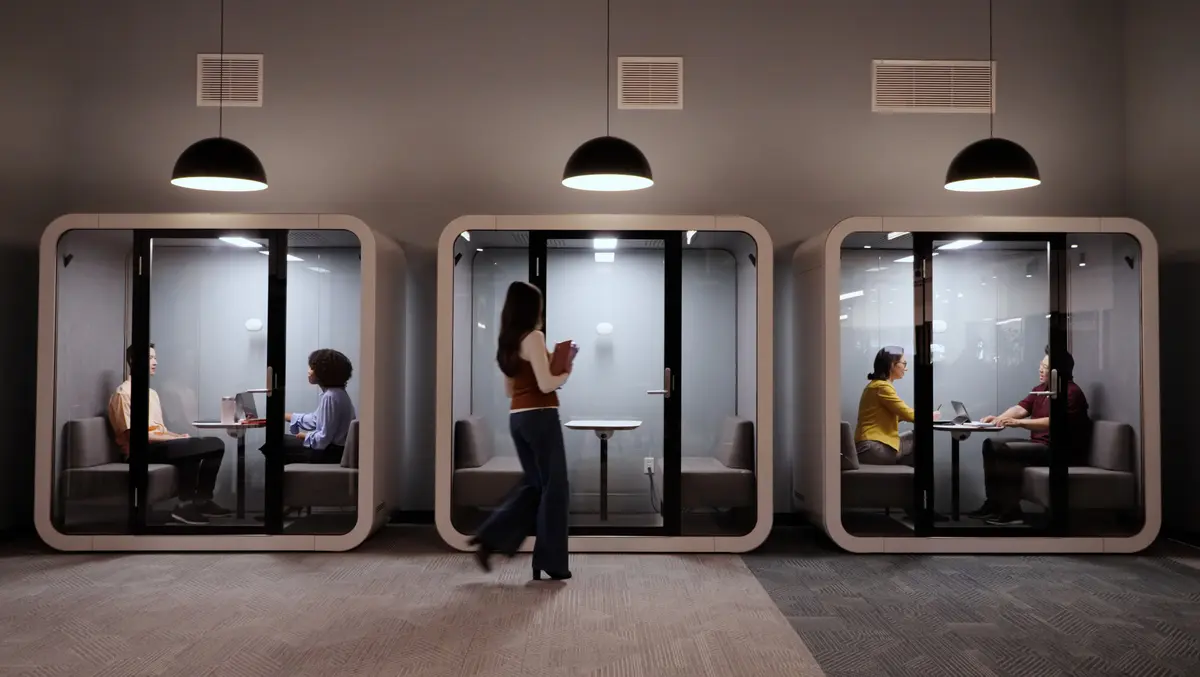
Its argument centres on enclosed workplaces where teams spend long periods together. In these settings, carbon dioxide can build to more than 1,000 parts per million by mid-afternoon, a level the company says studies have linked to weaker workplace performance.
Logitech also highlighted the role of volatile organic compounds, or VOCs, from office furniture, along with stagnant, dry air produced by heating, ventilation and air conditioning systems. Together, these conditions can contribute to fatigue, especially in shared rooms where air is repeatedly recirculated.
The comments shift attention to building conditions rather than more familiar explanations for a late-day drop in energy, such as heavy lunches, poor sleep or natural changes in alertness. Logitech argues that workers and managers may not recognise the problem because carbon dioxide and VOCs are largely invisible and odourless.
Sean Byrne, Head of Logitech for Business ANZ, said offices may be misreading the cause of the afternoon slowdown.
"Everyone's hit that 3pm slump before, but I'd argue that it's not laziness - it could just be the air we're all breathing," Byrne said.
"Though it's easier to blame a larger lunch, staying up late to binge-watch a new series, or even a sugar crash, the real problem is in the air we're breathing. If you've got groups of people taking in the same air in an enclosed space, VOCs are being recirculated and carbon dioxide levels are slowly rising. It's hard to manage what you can't see, so the impact of air quality can be overlooked. But it really shouldn't be, as in-office environmental sensors are available that can track CO2 and other particles, taking the issue from something invisible to something fixable."
Monitoring air
The company tied the issue to a wider discussion about workplace analytics and facilities management. Here, the emphasis is on sensors that measure room conditions while employees are working and feed information into monitoring systems used by building and technology teams.
Byrne said the usefulness of that approach depends on how easily the data can be integrated into existing dashboards and shared with managers responsible for ventilation and workplace settings. The aim, he suggested, is to identify deteriorating air quality before staff begin reporting tiredness or discomfort.
That framing positions air quality monitoring as a practical building management task rather than a broader wellbeing message. It also reflects the growing overlap between office technology, facilities operations and environmental data, as more employers use sensors to measure room occupancy, equipment use and workspace conditions.
For companies with hybrid working patterns, the issue may be especially relevant in meeting rooms and collaboration areas that experience bursts of heavy use. These spaces can move quickly from lightly occupied to full, changing carbon dioxide levels and ventilation demands within a short period.
Logitech's comments also show how office equipment suppliers are trying to extend their role beyond desks, keyboards and video meeting hardware into workplace conditions management. Environmental monitoring products are increasingly being presented as part of the same office technology stack as room booking systems and meeting devices.
Product link
Byrne referred directly to Logitech Spot, the company's environmental sensing device, as an example of hardware that can help offices track conditions and respond more quickly. He added that broader integration with partner systems means more workplace data can be gathered across different settings.
Logitech's position is that a relatively small wall-mounted device can provide information that helps employers make operational decisions without disrupting the working day. That could include adjusting ventilation, identifying problem rooms or changing how heavily certain spaces are used at different times.
Byrne set out that argument in a further statement.
"A sensor that sits quietly on the wall may be taken for granted, but it's actually a major productivity lever office managers can pull without upending everyone's working day," Byrne said.
"We need the right air if we're to think clearly and avoid the post-3pm slump. As the old saying goes, if you can measure it, you can fix it, and devices such as our own Logitech Spot sensing device are key to making it happen. We're now able to integrate Spot with more partners than ever before, significantly broadening the data it gathers across more workplaces. With this data, office managers can design poor air quality right out of the building, keeping energy levels up."