

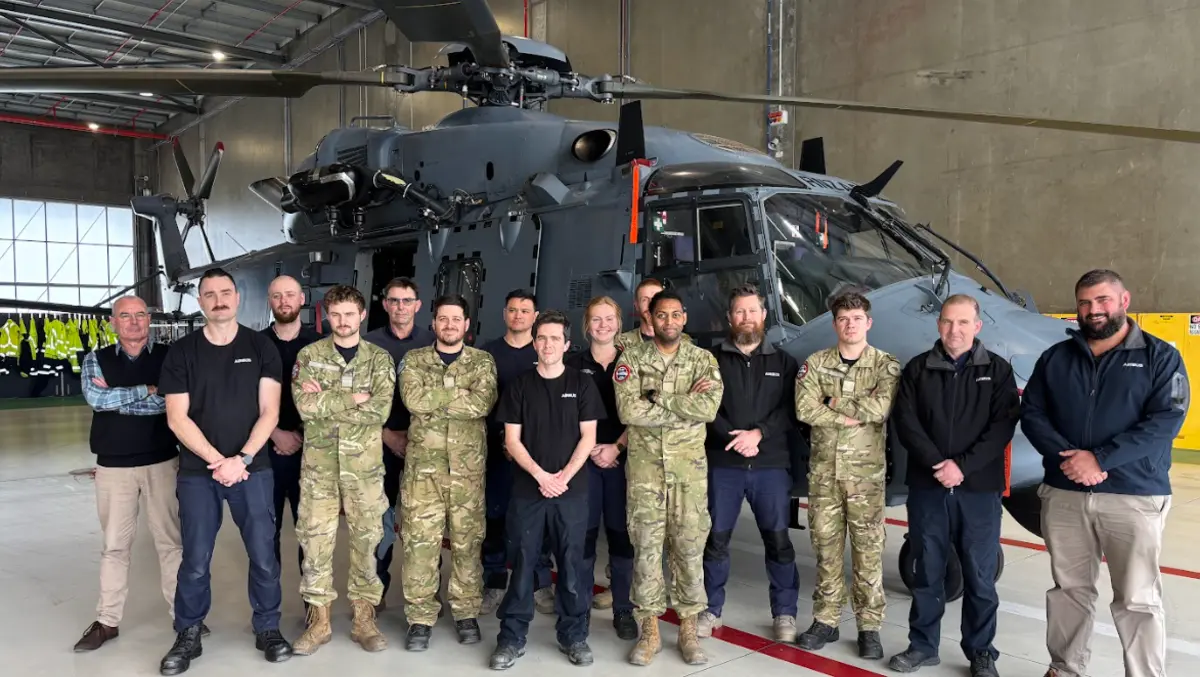
New Zealand NH90 helicopter hits 3,000 flight hours
Tue, 8th Sep 2026
The Royal New Zealand Air Force has recorded the world's first NH90 helicopter to reach 3,000 flight hours in service. The milestone was achieved by aircraft TNZA002 at Base Ohakea.
It puts New Zealand's NH90 fleet at the forefront of a global population of about 530 aircraft in active service across several configurations. The air force operates eight NH90s through No. 3 Squadron.
The service said the milestone reflects how intensively the aircraft are used rather than the age of the airframe. New Zealand's first two NH90s entered service in 2011 as replacements for the ageing Iroquois fleet, yet operators in Europe with older aircraft have not reached the same total.
"It's a significant achievement for what is a small fleet and small team," said Squadron Leader Lachie Johnston, NH90 Flight Commander, Royal New Zealand Air Force.
"We need to always have these aircraft available to fly, and it's a testament to the maintainers, who put in the long days in often trying conditions to get the helicopters flying, as well as the supply chain and the fleet planners. They are the secret sauce to our success."
Wide workload
In New Zealand, the NH90 fleet is used for both military and civil support tasks. Its roles include tactical troop transport, search and rescue, casualty evacuation, support for police and government agencies, alpine operations, maritime deployments from HMNZS Canterbury, and disaster relief missions across the Pacific.
That varied workload has translated into sustained flying hours during major emergencies. In the Kaikōura earthquake response, NH90 helicopters helped establish an emergency air bridge after road access to the region was cut off.
Patrick Power, Airbus Team Lead for the NH90 Programme, recalled arriving in Christchurch with three NH90s to support the operation. He has worked continuously on the platform in New Zealand since its introduction, first in uniformed Royal New Zealand Air Force roles and later in civil positions.
"Trucks would arrive with aid, and we would load it onto the helicopter. They would depart for Kaikōura and return with a full load of people.
"We would load it again, repeating that cycle many times a day."
He also described the pressure on engineering teams during the response.
"I always remember we had to clean the windscreen every time they came back because there were so many other helicopters in the sky doing rescue work that any small black mark looked like another aircraft.
"The rate of effort was intense as we had to perform all the maintenance and get them ready for the next day, but it was very rewarding because you knew you were making a difference."
The same pattern emerged during Cyclone Gabrielle, when the squadron made seven of its eight aircraft available in a single day, with the remaining helicopter already in servicing. During that response, crews evacuated 384 people and 23 pets, while transporting 25,600 kilograms of external cargo and 66,810 kilograms of internal cargo.
The fleet was also deployed during the Whakaari White Island eruption and the Australian bushfires, underlining the operational demands placed on the aircraft.
Maintenance model
Behind the high level of use is an integrated maintenance arrangement between Airbus and the Royal New Zealand Air Force at Ohakea. Since 2015, Airbus has supplied an embedded workforce that works alongside air force mechanics within the service's maintenance organisation.
This joint deeper maintenance team carries out the major 600-flight-hour servicing cycles, each taking about three months per aircraft. Power said the embedded team has grown from four to 10 personnel since the arrangement began.
The organisation said the workforce's long tenure has helped preserve technical knowledge and improve training, repair development, procedure updates and risk assessments. It said the result has been fleet serviceability of about 75 per cent, above the global operator average for the NH90.
According to Airbus and the air force, the support structure also allowed New Zealand to complete a fleet-wide Software Release 2 upgrade across all its NH90s ahead of other operators.
Power trained on the type in Marignane in early 2011 and helped establish the initial deeper maintenance line in New Zealand before moving to Airbus. He said the aircraft still presents a daily technical challenge after 15 years of work on the platform.
Another member of the embedded team, Airbus Avionics Technician Alexandra "Allie" Thompson, works on 600-plus-hour checks and routine repairs.
"Because they're older aircraft and not brand new, there's always going to be something fun to fix," said Thompson.
She also spoke about the unusual nature of the role for a civilian engineer.
"It's not often you get to work on the mighty beast of an NH90 as a civilian."