

New Zealand opens Te Rua archive centre in Wellington
Thu, 26th Mar 2026.webp)
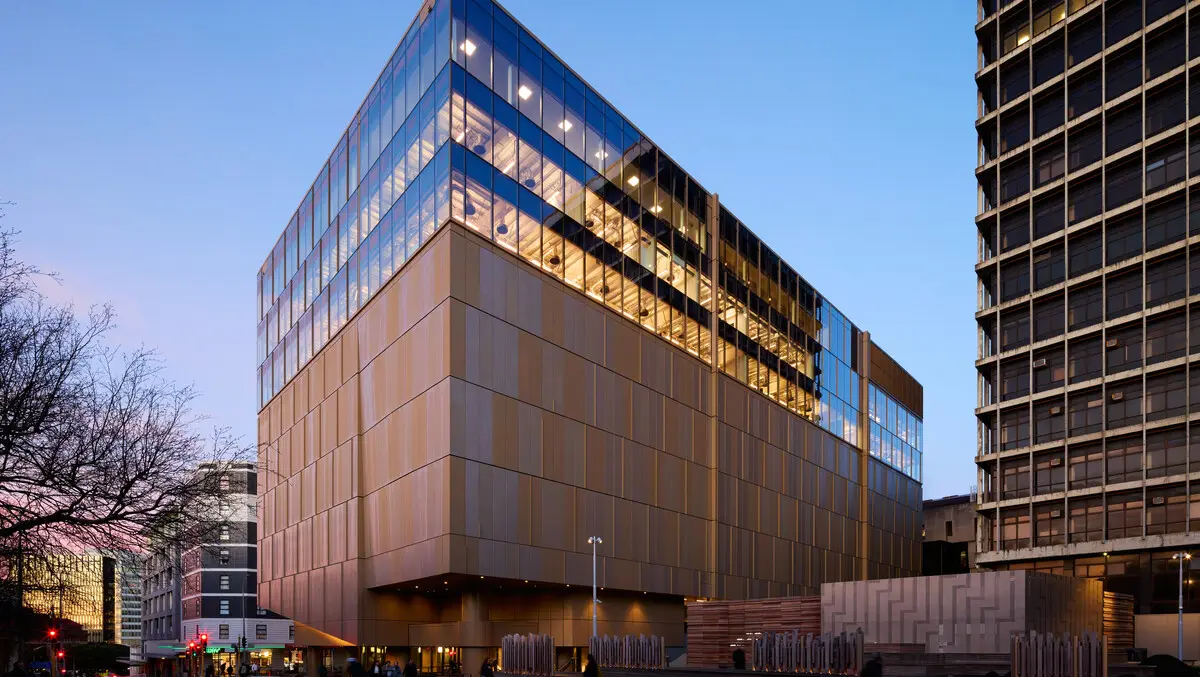
New Zealand has opened the NZD $290 million Te Rua archival facility in Wellington. The building will house national records and taonga on a new heritage campus shared by Archives New Zealand and the National Library.
Archivists have already begun moving more than 150,000 containers of historical material into the building, including photographic glass plates and early negatives that require tightly controlled storage conditions. The site is part of Te Kahu, with a connecting structure, Te Hono, linking Te Rua to the National Library.
Engineers involved in the project described the building as one of the most complex pieces of civic infrastructure constructed in New Zealand. It was designed to keep temperature, humidity and air movement stable for fragile collections while also coping with earthquakes, power loss and longer-term environmental risks.
The project reflects growing pressure on archives worldwide to adapt storage systems for climate change and disaster resilience. In New Zealand, the facility is also intended to help protect records with cultural, legal and political significance, including items tied to the country's documentary heritage obligations under UNESCO's Memory of the World programme.
Complex design
One of the building's central engineering features is its envelope. More than 2,300 exterior panels form a bronze rainscreen facade that also incorporates cultural design elements developed with mana whenua.
At the entrance, the facade includes a poutama pattern, a stepped motif associated with the pursuit of knowledge and the human journey toward greater understanding. The fixing system was designed to reduce thermal bridging and limit air leakage, two factors that can undermine environmental stability in archival storage.
Independent testing found the facade could maintain internal conditions for at least 48 hours after a power failure, with temperatures held within plus or minus 1C. That threshold is considered important for limiting deterioration in delicate paper, photographic and audiovisual materials.
Phill Stanley, Portfolio Manager for New Zealand at Dexus, said the project required solving unusual technical problems for a public building.
"Archives place extremely demanding requirements on buildings because the materials they hold can deteriorate rapidly if temperature, humidity or air movement fluctuates," Stanley said.
He said Te Rua's design and construction required solutions that would protect the collections even during severe earthquakes, prolonged power loss and other natural disasters.
Testing showed the facade exceeded international archival benchmarks, including those associated with institutions such as the Smithsonian Institution, the Library of Congress, the British Library and the US National Archives. The comparison is likely to draw attention from other countries reviewing how to modernise archive storage against climate and seismic threats.
Shared campus
The campus brings together staff from Archives New Zealand, the National Library and Nga Taonga Sound & Vision in one place for the first time. The arrangement is intended to strengthen coordination between institutions responsible for preserving and sharing the country's documentary record.
Eventually, the building will hold millions of photographs, films and records documenting New Zealand's political, cultural and social history. These include government records and other materials tracing the legal and cultural history of Aotearoa New Zealand.
Stanley said archive operators in other countries face similar pressures as collections age and environmental conditions become harder to manage.
"Across the world, national archives are grappling with how to protect ageing collections from environmental change while maintaining access for researchers and the public," he said.
He said the solutions developed for Te Rua show how advanced engineering, cultural design and archival science can work together to protect a nation's history.
The facility was delivered through a public-private partnership between the Department of Internal Affairs and Dexus. Stanley said the project was completed on time and on budget, using a digital twin model as part of the design and construction process.
He said Te Rua was delivered on time and on budget through a close partnership with the Department of Internal Affairs, combining advanced engineering, sustainability design and one of the most sophisticated digital twin models developed for a New Zealand building. Integrating cultural design with that level of technical innovation, he said, has created a facility capable of protecting the nation's documentary heritage for generations to come.