

PepsiCo backs five Asia Pacific startups for expansion
Fri, 16th Oct 2026 (Today)
PepsiCo has signed letters of intent with five startups from its Greenhouse Accelerator in Asia Pacific, including Australian businesses Adiona and X-Centric Sciences.
The agreements outline plans to explore whether the startups' sustainability-focused tools could be deployed more widely across the region.
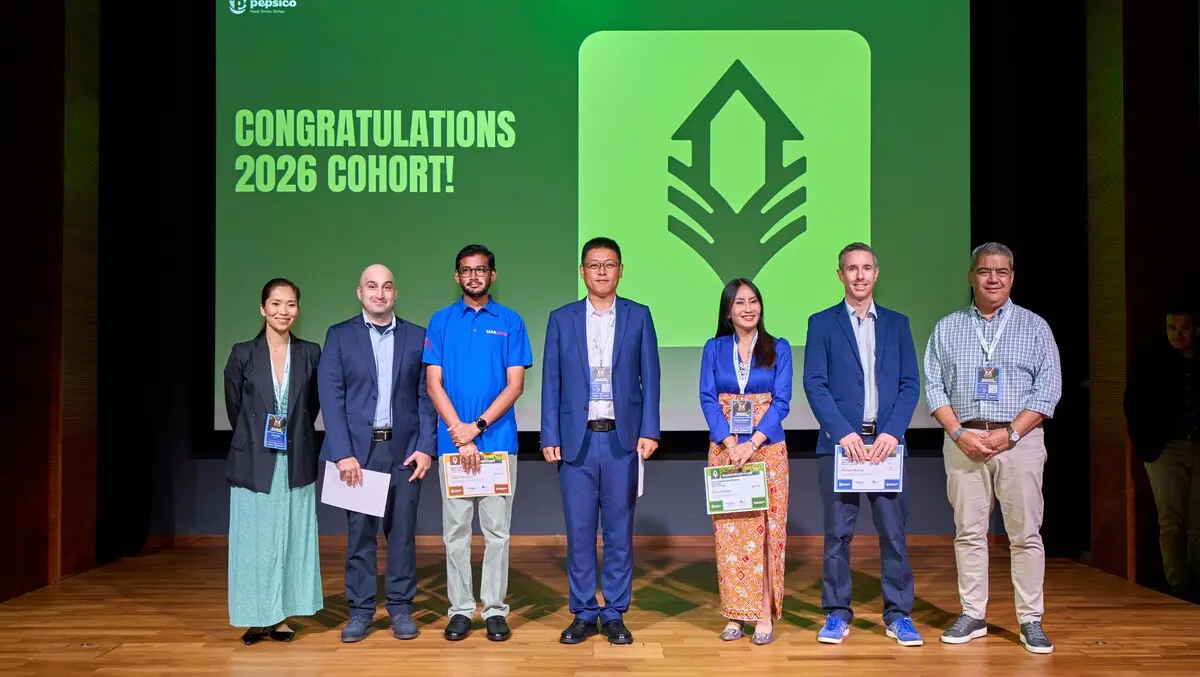
The five companies are returning participants in PepsiCo's 2026 IMPACT Edition, a seven-month programme that paired founders with internal teams across sustainability, supply chain, procurement, research and development, operations, finance and legal. The group comprises Adiona, Bali Waste Cycle, Beijing AIForce Tech, Takachar and X-Centric Sciences.
The work focused on moving beyond early pilots and testing whether each startup's technology could meet operational and commercial requirements. The letters of intent do not commit either side to deployment, but they indicate discussions will continue.
Australian projects
For Adiona, the focus is logistics in China. The Australian company and PepsiCo agreed to explore network and logistics optimisation, including carrier procurement and network planning.
Adiona's modelling of PepsiCo's planned Songjiang network indicated the potential to cut driver duty hours by as much as 12.1% and reduce distance travelled, along with associated modelled emissions, by up to 2.3% through shorter customer-dock times. These figures are modelled results rather than realised savings.
X-Centric Sciences is working on agricultural inputs in Australia. After field trials with PepsiCo's agriculture team, the two sides signed a letter of intent to examine precision soil intelligence.
Analysis of PepsiCo pilot data indicated a potential 2.8% reduction in fertiliser use by reallocating inputs from higher-nutrient areas to nutrient-deficient zones, rather than applying a standard blanket treatment. The issue has gained greater significance as disruption to fertiliser trade routes has raised concern over global supplies.
X-Centric has also drawn attention outside the programme. The startup was selected for Google DeepMind's first AI for the Planet accelerator in Asia Pacific.
Regional portfolio
Elsewhere in the cohort, Beijing AIForce Tech is seeking to extend existing work in China involving electric farm machinery. Its 140HP electric tractor is already operating under a five-year commercial lease with PepsiCo China in potato farming, while a larger 180HP model remains in testing.
Bali Waste Cycle is discussing an expansion of packaging recovery and recycling work in Indonesia. During the programme, the company used recovered snack packaging in street signs installed in Denpasar and Gianyar, and examined demand from tourism and corporate customers.
Takachar, which develops portable equipment that converts agricultural residues into biochar, signed a letter of intent to continue evaluating possible uses of its technology across agricultural value chains in Asia Pacific.
Since 2023, PepsiCo's Greenhouse programme in Asia Pacific has worked with 30 startups and supported 22 pilots in circularity, sustainable agriculture and climate-related projects. The 2026 edition placed greater emphasis on commercial readiness over grant-based experimentation.
Anne Tse, Chief Executive Officer, Asia Pacific, PepsiCo, said the company views startup partnerships as part of a broader effort to address operational pressures in the food system.
"Building resilient, growing businesses in Asia Pacific will increasingly require collaboration across sectors and capabilities," said Tse.
"Through the Greenhouse Accelerator, we are bringing entrepreneurs together with PepsiCo teams to test emerging solutions against real business and operational challenges across the food system. The opportunity goes beyond any single technology or partnership. By working with startups, investors, and other partners, we can help create stronger connections across the innovation ecosystem, explore solutions with the potential to support business resilience and growth," she said.