

Robbyant open-sources LingBot-World 2.0 for live video
Fri, 10th Jul 2026.webp)
Robbyant has open-sourced its LingBot-World 2.0 world model, designed for extended real-time video generation and interactive simulated environments.
Developed by the embodied AI unit within Ant Group, the model builds on the earlier LingBot-World 1.0 system, which delivered stable generation for minutes rather than hours.
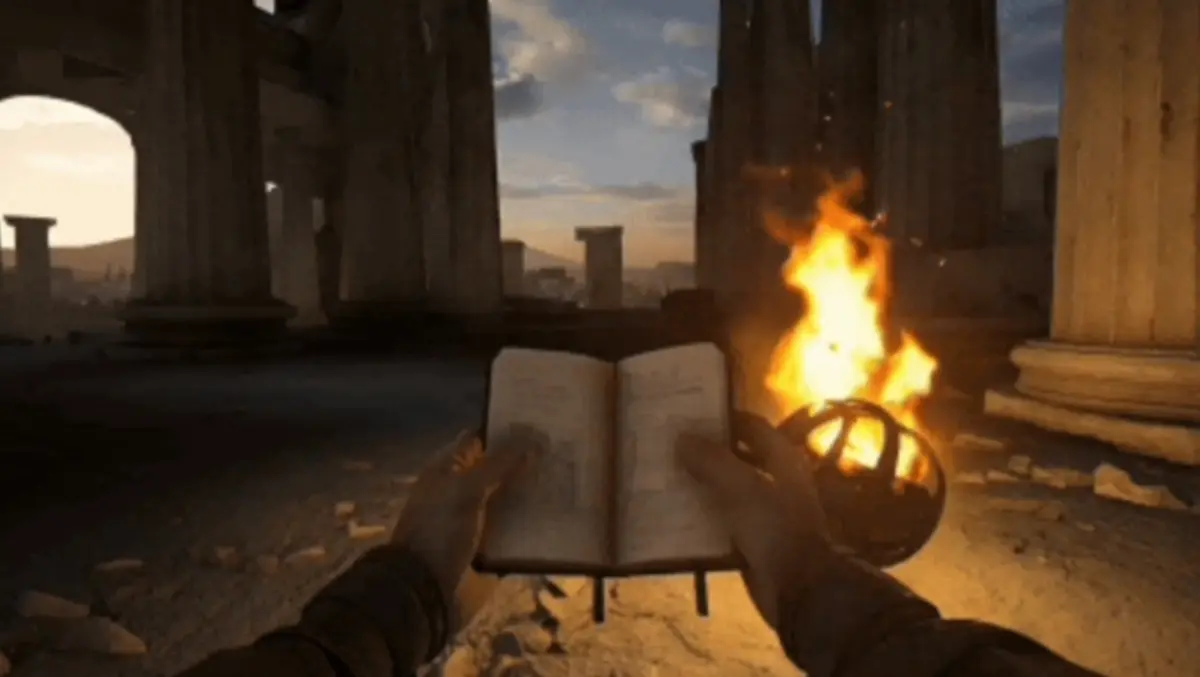
LingBot-World 2.0 supports continuous generation for up to an hour at 720p and 60 frames per second. It also lets users interact with generated scenes in real time, including controlling characters and changing perspective through keyboard input.
The release adds a native agent mechanism intended to make generated environments respond and change as interaction continues. The system includes a Pilot Agent, which plans and executes character behaviour, and a Director Agent, which introduces new events as scenes develop.
Longer sessions
Long-form video generation has been difficult for AI developers because image quality and scene structure often deteriorate over time. LingBot-World 2.0 is designed to address that through a causal pretraining approach and a mechanism called Mask of Bidirectional Attention, or MoBA.
The model learns world evolution in chronological order to reduce the cumulative errors that can lead to blurring, geometry failures and scene breakdown in extended sequences. In hour-long stress tests, Robbyant said, visual output showed no quality drift.
To support interactive use, Robbyant also produced a faster inference version of the model and reworked the generation pipeline so content can be generated, transmitted and displayed simultaneously, rather than only after a full sequence is complete.
That approach is intended to reduce latency and make the experience feel closer to a live simulation than a pre-rendered video. Users can move characters in real time and switch viewpoints while scenes continue to evolve.
Broader actions
Beyond movement and navigation, the model supports a wider range of actions inside generated environments, including attacking, shooting arrows, casting spells, jumping and gliding.
It also supports text-triggered changes to the environment, including day and night cycles, weather shifts and the insertion of new entities. These events are generated according to the state of the scene at the time of interaction, Robbyant said.
Another feature is support for multiple users within the same persistent world. That allows collaborative exploration and interaction in a single environment, which Robbyant described as an important step toward multiplayer AI-generated experiences.
Open-source push
LingBot-World 2.0 has been released under an open-source licence with day-one support for SGLang. Robbyant has also made the model available through its Reactor platform, where users can try the system online.
Alongside LingBot-World 2.0, Robbyant has also open-sourced LingBot-Video. It described the separate model as a video generation foundation model built on a Mixture-of-Experts architecture and designed for embodied intelligence applications.
LingBot-Video was redesigned for robotics use cases and is aimed at improving inference efficiency, physical plausibility, action comprehension and task completion. The release broadens the group's open-source effort beyond simulated world generation into video models more directly tied to embodied AI research.
The latest release comes as developers across the AI sector compete to improve the coherence, controllability and duration of generated video and simulated environments. For companies working on agents and robotics, longer and more stable interactive world models are increasingly seen as useful tools for training, testing and behavioural experimentation.
Robbyant said LingBot-World 2.0 integrates a native agent structure that shifts generated worlds from passive viewing environments to systems that continue responding to users as conditions change. The model supports "sustainably interactive and dynamically evolving" environments, it said.