

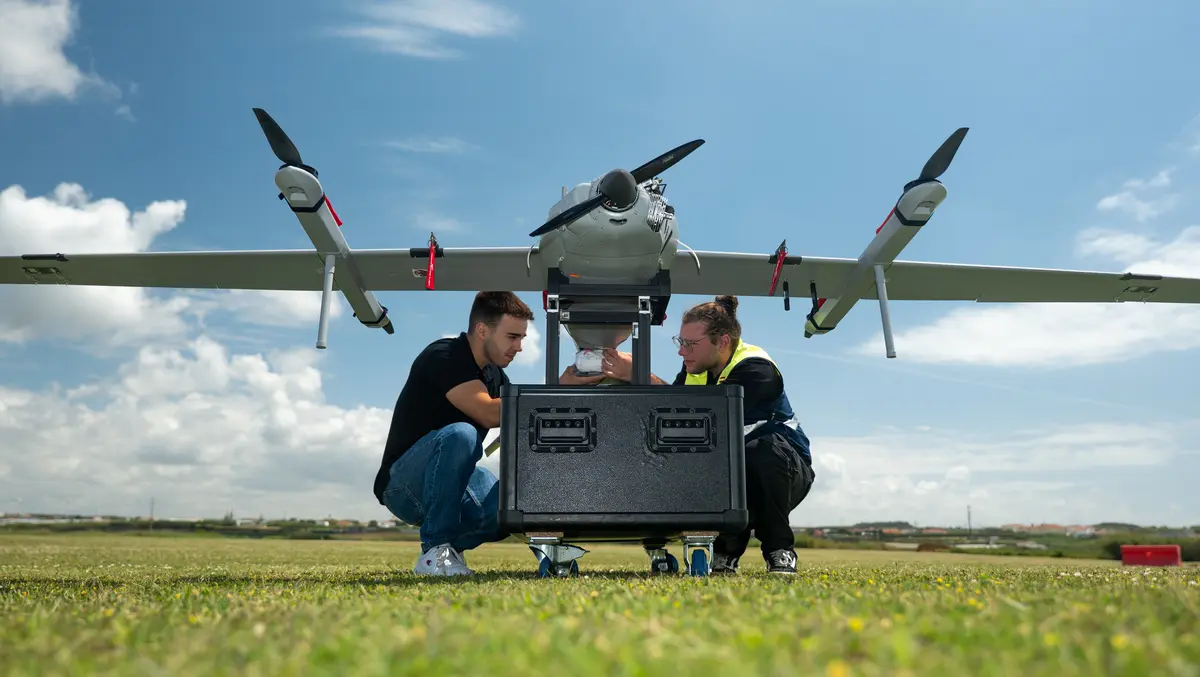

TEKEVER has formed a strategic partnership with EPE New Zealand, signalling a joint push into New Zealand's market for uncrewed and autonomous systems for defence and security.
The arrangement combines TEKEVER's uncrewed platforms and intelligence tools with EPE's local delivery experience and customer relationships. It covers maritime and land requirements, with an emphasis on interoperable systems and operational readiness.
New Zealand has paid increasing attention to uncrewed and autonomous technology in recent years, particularly for surveillance, maritime domain awareness and support to remote operations. The tie-up adds another European supplier to a market where local partners often handle integration, training and in-country support for government customers.
"New Zealand is a strategically important market for TEKEVER," said Paulo Ferro, VP of Strategic Development at TEKEVER. "Our approach is built around close dialogue with end users, ensuring our systems evolve in line with real operational needs. Partnering with EPE allows us to combine that pace of innovation with strong local insight and trusted market presence."
Platform portfolio
TEKEVER is bringing a range of uncrewed aircraft and an associated intelligence offering to the partnership. The collaboration includes the AR5, AR3 EVO and the ATLAS intelligence product.
AR5 is described as a medium-altitude, medium-endurance platform designed for long-range missions. It is positioned for use across air, maritime and land domains, with potential missions including maritime patrol, surveillance, search and rescue and wide-area monitoring.
AR3 EVO is a modular uncrewed aircraft that combines a fixed-wing design with vertical take-off and landing. It is pitched for maritime and land intelligence, surveillance and reconnaissance missions, with deployment flexibility and a smaller logistical footprint cited as advantages for local operations.
ATLAS is TEKEVER's real-time intelligence product, combining onboard and ground-based tools for live and historical data use. It is aimed at decision-makers working with collected information during operations.
The companies did not disclose commercial terms, expected contract timing, or whether any New Zealand government programmes are directly tied to the announcement. They also did not detail how responsibilities will be split for sensor fit-out, communications integration or sustainment.
Local delivery
EPE New Zealand supplies robotics and autonomous solutions and provides support services in New Zealand and the wider region. It works across force protection, CBRN defence and counter-IED for defence forces, law enforcement and other government agencies in Australia, New Zealand and the Indo-Pacific.
Under the partnership, EPE will act as a local conduit for the deployment and support of TEKEVER systems. This approach is common in New Zealand procurement and operations, where in-country support and training can be central to fielding new systems, particularly for teams operating across dispersed locations.
A key focus is integrating uncrewed platforms with other equipment. EPE cited its experience integrating platforms with sensors and effectors, alongside specialist training and local through-life support.
"This partnership with TEKEVER represents a significant step forward in strengthening New Zealand's autonomous systems capability," said Andy Cross, General Manager of EPE New Zealand. "By combining TEKEVER's genuinely mature and proven autonomous platforms with EPE's deep understanding of the local operating environment, we bring decades of experience delivering robotic and autonomous systems into operational use, including the integration of platforms with sensors and effectors, and supported by specialist training and local through-life support."
Showcase event
The collaboration will be highlighted at the NZDIA Uncrewed Systems Showcase in Auckland, where EPE plans to engage stakeholders from the defence and security community.
TEKEVER operates across several European countries and has facilities in the UK, Portugal, France and Ukraine. It says it employs more than 1,200 people and develops systems spanning aircraft structures, propulsion, payloads, communications and software, alongside data science and artificial intelligence.
In New Zealand, the near-term test will be how quickly the partnership converts product positioning into local programmes and sustained operations. The focus remains on maritime and land missions, and on meeting evolving end-user requirements through the combined offering.