

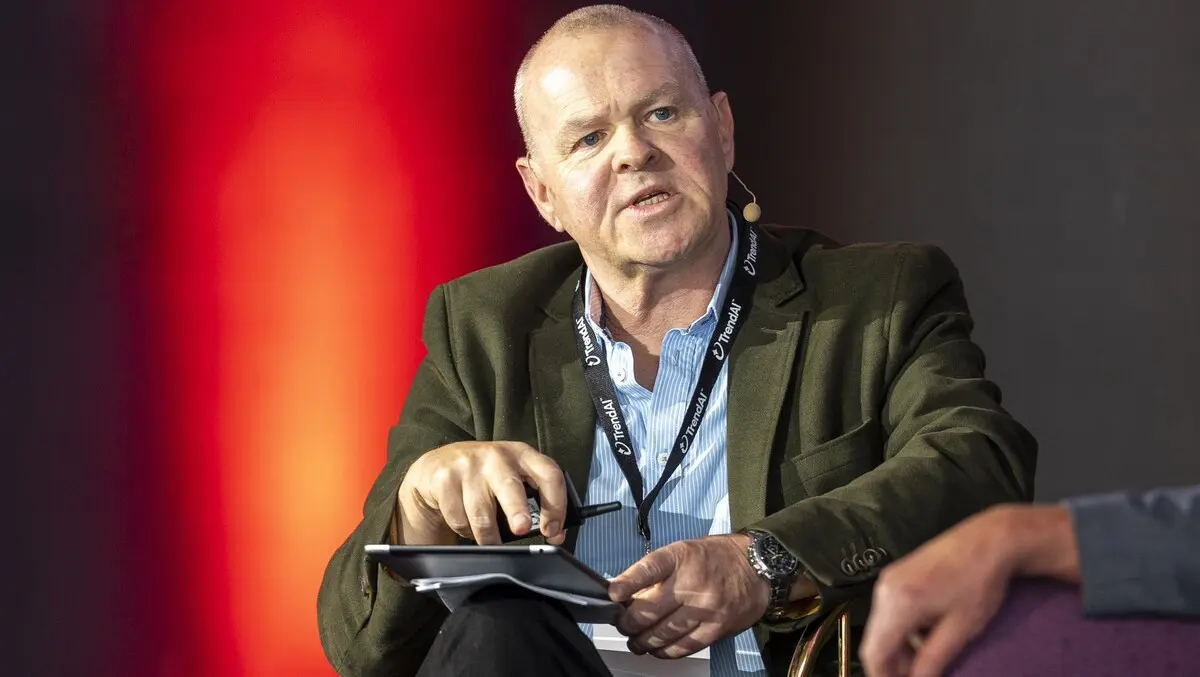
TrendAI appoints Harrison as Global VP of AI Security
Fri, 24th Jul 2026
TrendAI has appointed Richard Harrison Global Vice President of AI Security, its first global executive role based in New Zealand.
Based in Auckland, Harrison joins from Foodstuffs South Island, where he was chief information security officer. The retail cooperative operates more than 200 sites and employs about 14,000 people, giving him experience of cyber security issues across a large distributed organisation.
Before that, he led Accenture's New Zealand cyber security practice and served as chief information security officer at healthAlliance, a former public-sector shared services health organisation.
The appointment puts a New Zealand-based executive in a global AI security role as businesses try to expand their use of artificial intelligence while keeping pace with security and governance demands. It also gives TrendAI a senior presence in Australia and New Zealand as organisations face growing concern over cyber threats, including warnings from intelligence agencies about state-backed activity.
TrendAI is Trend Micro's AI security business unit. Harrison will work with leadership and product teams on customer use of AI systems, focusing on deployment management and reducing risk and governance gaps.
Regional focus
Basing the role in Auckland is notable because global technology leadership positions are often concentrated in larger overseas markets. For TrendAI, the move signals a stronger emphasis on Australia and New Zealand as companies in the region weigh how to deploy AI tools without creating new exposures in data handling, compliance and operational oversight.
Harrison's background suggests TrendAI wanted someone with practical experience inside end-user organisations rather than a purely advisory profile. His work in retail, consulting and health spans sectors where cyber resilience is closely tied to daily operations, customer trust and regulatory pressure.
That experience is likely to matter as AI systems move deeper into customer service, internal workflows and decision-making tools. Security leaders are grappling with how to govern those systems, who owns the risks and how to respond when deployment moves faster than existing controls.
Security pressure
The appointment comes as cyber security teams face a more complex landscape. AI is being adopted quickly, but many organisations are still working out how to secure models, protect data used in training and operation, and monitor how staff and third parties access AI tools.
In New Zealand and Australia, those concerns sit alongside rising scrutiny of ransomware, supply chain compromise and nation-state targeting. The pressure has pushed boards and executive teams to demand clearer reporting from security leaders on risk, governance and incident response.
Harrison said the gap between AI uptake and the maturity of security controls is widening.
"I am thrilled to have joined the TrendAI team at such an exciting time for our cyber security industry. AI adoption is accelerating faster than security, governance, and risk models can keep up. The gap is widening between fast evolving threats and defenders' ability to respond. Closing that gap and doing it in a way that builds real trust in AI is my key focus, and I am keen to utilise my real-world experience as a CISO to help organisations successfully achieve this goal," Harrison said.
Market signals
The creation of the role underlines how vendors are treating AI security as a specialist discipline rather than an extension of traditional cyber security. That shift reflects growing technical and governance questions around model integrity, data leakage, identity controls, and the use of AI by attackers as well as defenders.
It also reflects a commercial reality. As companies spend more on AI tools and infrastructure, they are under pressure to show deployments are properly governed and do not create unmanaged risk. Security providers are responding by building teams and leadership roles specifically aimed at those concerns.
For TrendAI, appointing a former customer-side security chief with local market experience may help it speak more directly to CISOs and boards in the region. Harrison's track record across a major retail cooperative, a consulting firm and the health sector gives him insight into how different organisations approach cyber risk, budget constraints and executive accountability.