Incident Response stories
Poor communication can deepen the fallout from a workplace incident, leaving employees, families and regulators without timely, accurate updates.
Integrated automation aims to cut identity-breach recovery from days to hours, reducing manual work for security teams during outages.
The hire signals rising pressure on security teams as AI expands attack surfaces across hybrid cloud systems and customer data flows.
AI-enabled attacks have surged 89% year on year, prompting Fujitsu to shift customers towards continuous cyber resilience and faster threat response.
Security teams can now trace blocked cloud requests faster, as Google Cloud rolls out policy intelligence for VPC Service Controls to cut investigation time.
Machine-speed discovery is shrinking defenders' lead time, as AI now uncovers obscure flaws and turns them into exploits before patches land.
Despite high confidence in their controls, most firms still let AI agents run with broad access, and 29% have seen real harm.
With women still only 17% of cyber workers in the UK and Australia, executives warn AI could deepen security blind spots unless talent widens.
The new tools aim to curb prompt injection, data leakage and rogue AI activity as firms deploy agents with wider system access.
Enterprise security teams could see faster breach detection and response as CrowdStrike's new AI models are trained on live threat data.
Security teams could get faster investigations as ClickHouse folds RunReveal's platform expertise into its database business.
Organisations hit by ransomware will gain a secure, auditable recovery environment as HCLTech expands VaultNXT with Cohesity's clean room service.
Faster threat detection and procurement are among the gains as Interactive pushes AI into daily work, while guarding against security and governance risks.
A widening talent shortage and AI-driven threats are forcing security firms to treat more women in the field as a business priority.
The new products aim to help security teams detect AI-driven attacks, stop poisoned code and control autonomous agent access across systems.
As firms spread across cloud and on-premises systems, a combined security and compliance model is becoming harder to ignore for auditors and boards.
Falcon will be sold through Claude Marketplace and linked to Codex agents, as CrowdStrike widens its reach across enterprise AI buyers.
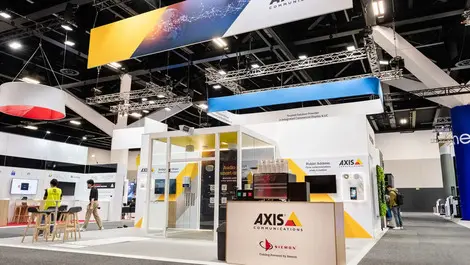
Sydney customers are being shown a push towards fewer stand-alone systems as Axis ties cameras, radar, audio and analytics into one platform.
Fans were spared buffering as Seven used New Relic to scale 7plus Sport for AFL demand and meet strict geotargeting rules.
Security teams could gain wider visibility into AI data flows as native Falcon support and two CrowdStrike integrations extend across VAST's platform.












.webp)