Power management stories
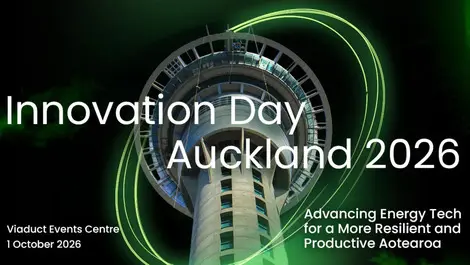
Businesses will hear practical guidance on tackling rising power demand, AI-driven electricity use and emissions pressure at the 2026 Auckland event.
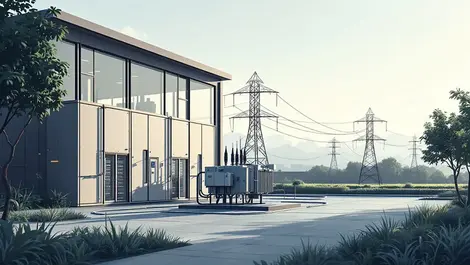
The outdoor-rated unit is meant to ease grid pressure and free up indoor space as AI data centres strain power and capacity planning.
Demand for US-made bidirectional systems is growing as data centres and battery storage projects need more flexible power management.
Bespoke chips are becoming central to vehicle performance and safety as automakers race to build software-defined cars.
Utilities and cloud operators could squeeze more AI work from fixed power budgets as Nvidia's DSX software lifts throughput and cuts demand.
The move gives Cummins earlier access to startups as it hunts for technologies to support electrification, energy systems and industrial decarbonisation.
Energy-constrained AI operators could run far more agentic tasks after NVIDIA said Vera Rubin systems deliver up to 30 times higher throughput per megawatt.
Broadcasters can now use third-party controllers to run System T over standard IP links, easing remote and temporary production setups.
It gives infrastructure teams rack-level visibility and control as demand rises for remote power monitoring in dense data centres and edge sites.
Rising AI and cloud demand is set to push power spending toward USD $70.94 billion by 2034, as operators race to avoid outages.
Orders and revenue prospects have improved for Weebit, which lifted FY26 guidance to at least A$13.5 million after three chip designs reached tape-out.
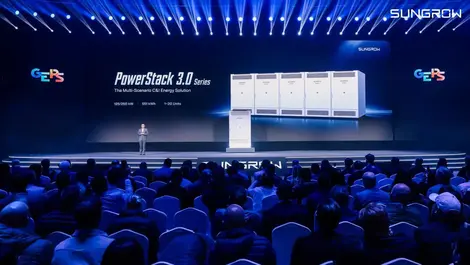
The new modular system is aimed at businesses seeking lower installation complexity, better space use and backup power during grid outages.
Developers and utilities could see faster project delivery as Create expands ONTRACK with Ampt's optimisers and battery converters for solar and data centres.
The tie-up gives IGEL OS customers another way to reach physical, virtual and cloud-hosted desktops without overhauling their end-user computing stack.
Customers and partners can now inspect integrated power and cooling systems in Singapore as AI data centres demand denser, more efficient infrastructure.
Operators facing surging AI demand can now test integrated cooling and power systems at a new Singapore facility for dense computing workloads.
The deal gives Singapore chip firms early access to simulation tools aimed at cutting packaging risk and speeding AI and HPC development.
Rack-level power monitoring is being pushed further into edge and branch sites as demand rises for cloud, AI and distributed workloads.
Businesses running AI workloads may now keep costly GPU servers online longer, as Park Place extends third-party maintenance to 60 data centres worldwide.
The chipmaker is boosting US investment as AI demand strains advanced capacity and pushes full-year spending higher.