Telcos stories
Customers could offset the cost of a new handset by recycling older devices, with One New Zealand unlocking more than NZD $10.6 million in value this year.
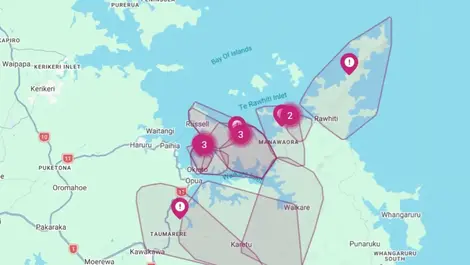
The latest disruption left 750 homes and businesses unable to take electronic payments, deepening pain for Bay of Islands operators after a slow winter.
The hire supports the media buying firm's expansion into newer markets including the US, while targeting clients in iGaming, eCommerce and travel.
Broad support for open source could shape telecom AI spending, with 89% of respondents backing it for cost control, governance and local adaptation.
The awards highlight how cyber security vendors now depend on local channel firms to support Zero Trust rollouts, hybrid work and cloud migration across APJ.
Enterprise data science teams can now keep Python AI workloads inside Teradata, reducing governance risk and speeding model training on AWS and Azure.
The pact gives Vection a route into enterprise customers across Italy and Europe, with Retelit set to generate at least €12 million by 2030.
Viewers streaming Champions League matches pushed traffic to 21.47 terabits per second, as demand on the hub rose 7 per cent in under four weeks.
Billions still offline and fraud on the rise as the GSMA pushes for 5G returns, cheaper handsets and global 6G standards.
The deal should help large firms deploy safer AI systems, with HCLTech adding Claude to services and software for banks, hospitals and manufacturers.
The deal should help enterprise customers improve message delivery and cut fraud risk as the pair expand across APAC markets.
Households facing tighter budgets may soon get a new prepaid option, as Boost Mobile New Zealand enters the market on the One NZ network.
The 18-month programme aims to make private 5G easier to deploy, with eight UK organisations set to test a single interoperable system.
Banks and phone firms face pressure to do more, as 34 per cent of Canadians say they were targeted by a scam in the past year.
Short clips could help streamers win and keep subscribers, with 40% of US viewers saying they would use services more often for them.
The rollout could speed up screening for high-volume roles, with 87% of candidates completing the interview and 95% finding the feedback useful.
A live production test on the Mumbai-Pune corridor gives Constl extra headroom for hyperscaler and AI traffic, lifting per-channel capacity by 60%.
Revenue from MRO-TEK's products division climbed as demand from telecom, enterprise and government customers offset weaker results elsewhere in the group.
Indoor connectivity at an Optus store in Coffs Harbour is being boosted as more than 80 per cent of mobile data use now happens inside buildings.
Australian firms could cut complexity and tighten remote access controls as the pair add SD-WAN to a unified managed security service.













.webp)