Thermal Management stories
The sector's edge could narrow unless Europe builds photonic chip factories and talent faster, speakers warned at a summit in Eindhoven.
Rising AI power density is pushing data centre operators towards higher-capacity liquid cooling, reshaping who suppliers like Nidec sell to.
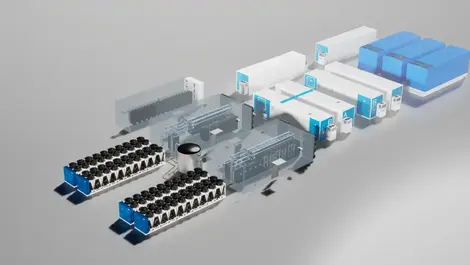
The new design could let operators devote 90 MW of every 100 MW of provisioned capacity to servers, easing power constraints for AI build-outs.
The software could help AI data centres cut energy and water use while keeping hotter, denser GPU racks within safe operating limits.
Creators needing faster mobile storage now have a new option, with Samsung's P7 Portable SSD offering USB4 speeds and up to 2TB capacity.
The one-litre machine is designed to let developers and creators run AI workloads locally, reducing reliance on cloud services for privacy and speed.
Rising AI chip power densities are prompting the pair to develop diamond-based packaging that could ease heat bottlenecks in GPU and RF devices.
The deal broadens Vertiv's support for liquid-cooled data centres in EMEA as operators seek specialist help with commissioning and maintenance.
Rising onboard computing power is forcing spacecraft designers to rethink thermal control as orbital data centres face extreme temperature swings and heat loads.
The system could free up more of a data centre's existing power for AI workloads, as cooling can account for up to 40% of energy use.
The deal broadens Vertiv's power offering as data centre operators race to secure electricity for AI sites amid grid constraints.
The architecture is aimed at AI-driven data centre builds, promising to reserve up to 90% of provisioned electrical capacity for servers rather than cooling.
Data centre operators could free up more power for servers as the new architecture is designed to direct up to 90% of provisioned capacity to IT compute.
Families struggling with bills could get free hot water and heating as the system aims to reuse GPU server waste heat in 100 homes by 2027.
Growing demand for AI cooling is drawing operators and cloud providers to Nidec, which used its Singapore debut to open partnership talks.
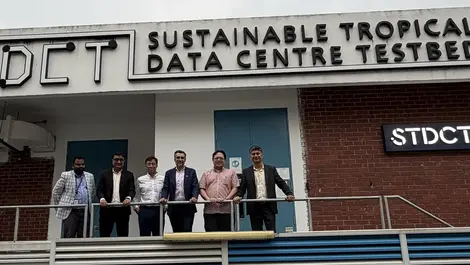
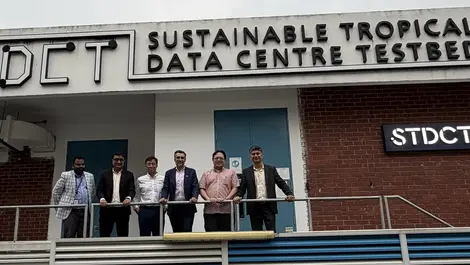
Cooling could account for up to 40% of energy use in tropical data centres, spurring research on cheaper, more efficient systems for AI workloads.
The partnership aims to curb soaring cooling costs for AI-ready data centres in humid climates, where energy use can reach 40%.
The portfolio targets grid resilience and AI-driven power demand, with compact systems aimed at cutting installation time and site costs.
The project aims to squeeze up to 35% more usable compute from the same power supply as AI demand increasingly hits cooling limits.
Customers and partners can now inspect integrated power and cooling systems in Singapore as AI data centres demand denser, more efficient infrastructure.