

.webp)
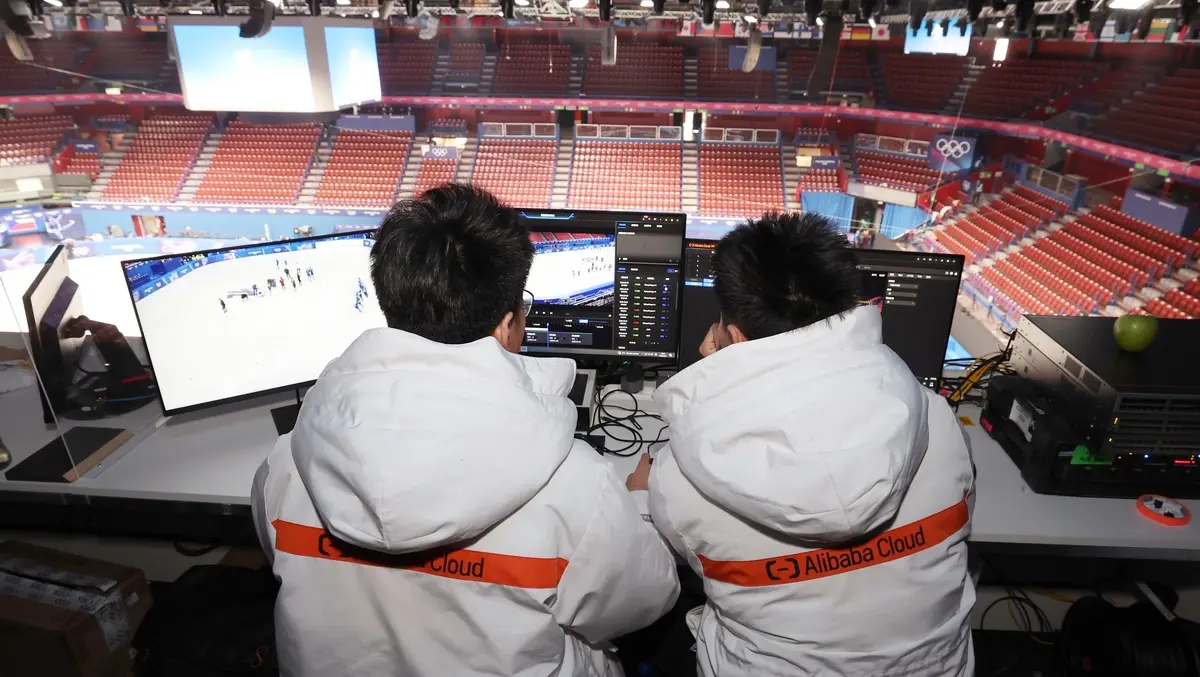
Alibaba Cloud will provide cloud and artificial intelligence systems for broadcast and media operations at the Milano Cortina 2026 Olympic and Paralympic Winter Games, working with Olympic Broadcasting Services (OBS) and the International Olympic Committee (IOC).
The deployment extends a technology partnership used at Tokyo 2020, Beijing 2022, and Paris 2024. The IOC has increasingly shifted broadcast production and content management to cloud-based workflows and expanded its use of AI tools.
For Milano Cortina 2026, the work focuses on two areas: live and near-live viewing features, including replay tools, and media management, including search and archiving of video and related assets.
Cloud delivery is particularly important for the Winter Games because events are spread across multiple venues and sports. Broadcasters must move large volumes of video among production teams, rights-holding broadcasters, and digital platforms. The organisations involved say the approach reduces manual work and speeds up production tasks.
Dr. Feifei Li, Senior Vice President of Alibaba Cloud Intelligence Group and President of International Business, outlined the goals for the Games:
"Each Olympic Games presents unique challenges in scale, geography, and complexity. For Milano Cortina 2026, we are applying cloud and AI capabilities to make broadcasts more dynamic, workflows more efficient, and Olympic moments more accessible to audiences around the world."
Replay system
A central broadcast feature is an upgraded real-time replay system. Alibaba Cloud's Real-Time 360o Replay is designed to deliver immersive replays with moving camera viewpoints and stroboscopic visual effects.
AI processing separates athletes from backgrounds such as snow and ice-conditions that can make subject detection harder than in stadium settings.
Alibaba Cloud says the system can generate 3D reconstructions of key moments in 15 to 20 seconds, close to live production needs when replay sequences are required quickly after an incident or scoring action.
Real-time 360° Replay is planned for use across 17 sports and disciplines at Milano Cortina 2026, including ice hockey, freestyle skiing, figure skating, and ski jumping.
The upgrade builds on earlier tools. At Beijing 2022, the partnership utilised a "BulletTime" effect that delivered freeze-frame and slow-motion views. For Milano Cortina 2026, Alibaba Cloud is adding a feature called "Spacetime Slices", which creates a composite image showing multiple phases of an athlete's movement.
In broadcast terms, these composite sequences can explain technique differently from standard slow motion and add another layer of visual storytelling for television, streaming platforms, and social media clips.
Media system
Beyond replay, the organisations are developing a media indexing and description tool for Olympic content. OBS is building an Automatic Media Description system using Alibaba's Qwen large language model.
The system identifies athletes and key moments, generates event descriptions, and tags video assets. It is designed to work within seconds, reducing manual logging and metadata entry during busy competition periods.
OBS expects the technology to improve how production teams search a large library of clips. It also supports natural-language queries, allowing staff to search using everyday phrasing, for example, "find the figure skating gold medal performance."
Fast search is a practical necessity during the Games. Editors often need to find a specific run, goal, jump, fall, or medal moment quickly for highlights programmes, studio analysis, social media distribution, and on-demand clips. Tagging also remains important after the closing ceremony, when archival teams organise footage for later use.
Alibaba says Qwen will mark the first use of large language model technology at the Olympics. The company also says the work will feed into a next-generation Olympic archive, reflecting a push to preserve and organise content at greater scale as distribution channels and formats expand.
The project comes as major sports rights-holders and broadcasters adopt AI for tasks such as speech-to-text, translation, highlight detection, and metadata generation. For Milano Cortina 2026, these tools are being integrated into the central broadcast workflow, with OBS and the IOC overseeing how content is produced and managed across sports and venues.
OBS says the Automatic Media Description system is still in early development, with work continuing in the lead-up to Milano Cortina 2026.