

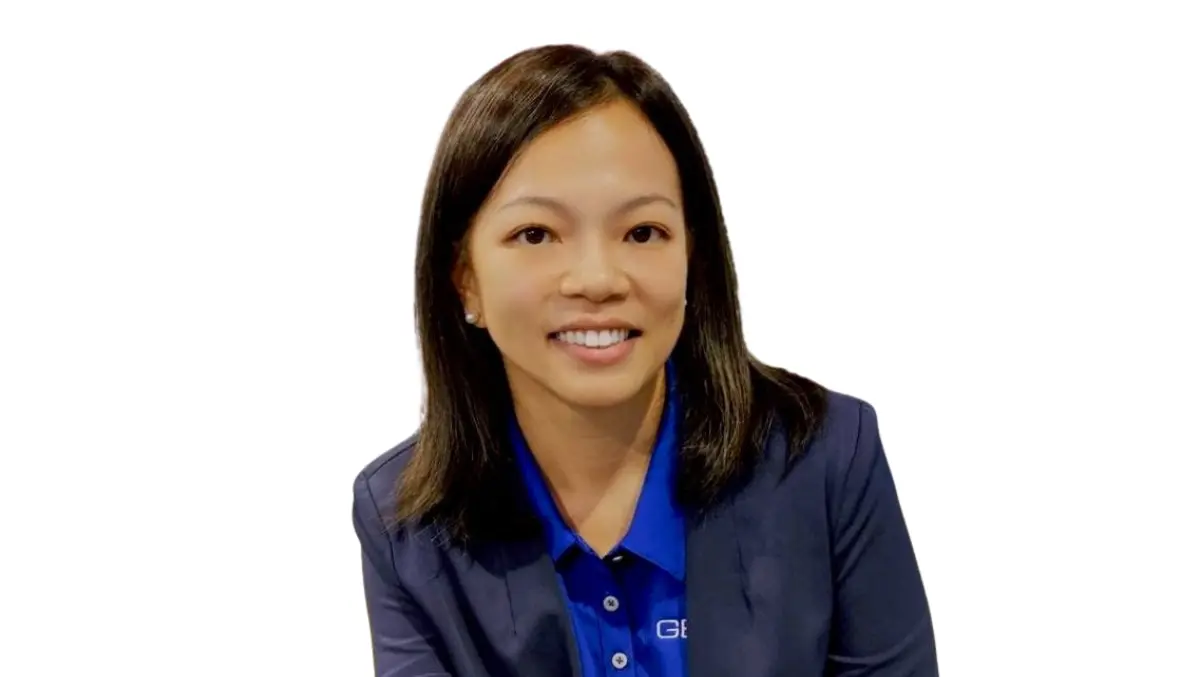
Getting comfortable with discomfort: Advancing female leadership in technology
Thu, 5th Mar 2026
International Women's Day is often a moment to celebrate progress. It is also an opportunity to reflect on what still needs to change, particularly in industries where leadership tables remain disproportionately male. Across technology and mobility, conversations about representation have become more visible. Meaningful progress, however, requires more than visibility. It requires a shift in mindset from both organisations and individuals about who we consider qualified and how credibility is built.
My own career did not begin in technology. I studied Social Science and spent a decade in banking and finance before moving into travel technology and, later, into mobility and telematics. Each transition required rebuilding my knowledge base and confidence from the ground up. At several points, I found myself in rooms where I was the only woman, and often the only person without a traditional engineering background.
Those experiences reinforced an important lesson: discomfort is not a signal to step back. In many cases, it is a precursor to growth.
Redefining what a technology leader looks like
A persistent barrier to advancing women in technology is the narrow perception of what a technology leader should look like. Linear career paths and deeply technical specialisations have traditionally been viewed as prerequisites. While technical expertise remains critical, today's environment demands a broader set of capabilities.
Leading business growth across Southeast Asia, for example, requires cultural intelligence as much as product knowledge. The region is a mosaic of markets with distinct regulatory frameworks, business norms and customer expectations. Strategies that succeed in one country cannot be replicated in another without adaptation.
Understanding how culture and systems shape behaviour has been invaluable in navigating this complexity. Technology does not operate in isolation; it succeeds or fails based on how well it aligns with the people and markets it serves.
Broadening our definition of leadership is therefore essential. When organisations value diverse experiences alongside technical expertise, they widen the pathway for more women to step confidently into senior roles.
Organisational responsibility and the business case for inclusion
Mobility and automotive technology remain male-dominated across much of Asia-Pacific, and perceptions about gender and expertise can still shape first impressions. While consistent performance and subject matter expertise ultimately build authority, progress cannot depend on individual resilience alone.
Organisations play a defining role in advancing gender equality. It is not enough to hire more women into the sector; companies must actively position them to lead. That means entrusting female leaders with strategic mandates, ensuring they front critical conversations and visibly reinforcing their authority with clients and partners. Inclusion is realised not when women are simply present at the table, but when their leadership is clearly recognised and supported.
The same intentionality applies to team building. Sustainable progress requires development, sponsorship and equitable access to opportunity. In building regional teams across Southeast Asia, I prioritise curiosity, accountability and collaborative mindset alongside technical capability. Experience has taught me that skills can be strengthened – but openness to learning and the ability to work across cultures are often what differentiate high-performing teams.
The cherry on top is that there is a clear business imperative for diverse teams. They are more commercially resilient, challenging assumptions and bringing broader perspectives to complex problems. That diversity of thought becomes the organisation's greatest competitive advantage.
The power of mindset
For many women in Asia, cultural expectations still shape how ambition is expressed. Caution and humility are often encouraged, while assertiveness can be judged differently depending on context. Navigating this requires both personal conviction and organisational awareness.
Confidence is often misunderstood as a prerequisite for leadership, but in reality, it is more frequently developed through action. Taking on unfamiliar responsibilities, contributing to technical discussions or leading cross-functional initiatives may feel uncomfortable at first. Yet, growth rarely occurs within the boundaries of certainty.
As the industry transforms, the question is not only how many women enter technology, but how many shape its direction. Leadership pipelines must be intentionally cultivated, and success should not be defined by a single archetype. Progress depends on organisations creating space – and on women choosing to step into it, even when the path feels uncertain.
In that sense, getting comfortable with discomfort is not simply a personal philosophy; it is a practical necessity. When women recognise that discomfort often signals growth, and when organisations actively back them to lead, the result is stronger leadership and more resilient innovation across the sector.