

Hectre raises NZD $12m to power AI fruit data push
Thu, 12th Feb 2026
Hectre, an Auckland-based horticulture software company, has raised more than NZD $12 million in an oversubscribed Series A round as it expands into overseas fruit markets.
The round was led by Punakaiki Fund, with participation from other private investors and existing shareholders. Cultivate Ventures and Nuance also reinvested.
Punakaiki said it invested after receiving capital through the Government's Active Investor Plus Visa scheme, which it has been deploying into New Zealand technology companies, including Hectre.
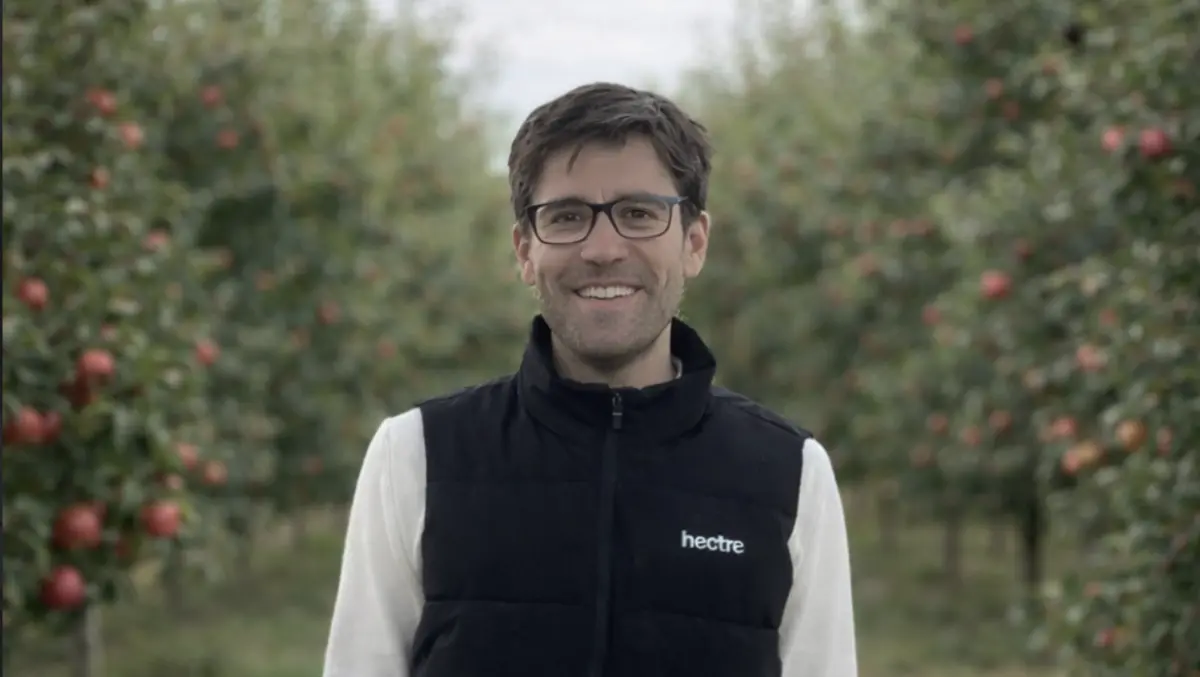
Chief executive and founder Matty Blomfield said Hectre initially aimed to raise NZD $10 million before extending the round. "We originally set out to raise NZD $10 million but the interest was so strong that we extended the round to over NZD $12 million," he said. "The size of the investment and the speed with which it was completed shows how well-positioned Hectre is for growth."
Revenue has been growing at about 100% per year, and the business has been scaling across fruit-producing regions, including North America, Europe, and Latin America.
Hectre sells tools that capture fruit measurements before it enters the packhouse. It states that it collects size, colour, and quality data representing 17 billion apples and 37 billion cherries each year.
Packhouse data
The product uses machine learning models and camera systems. Hectre says its Arc Top Down system captures real-time fruit quality information and automatically sizes and colour-grades large volumes before packing. It claims accuracy of up to 99%.
The company positions the technology as a replacement for manual checks, saying tasks that were previously slow and inconsistent can be completed in seconds on a mobile device or tablet.
Hectre argues that poor visibility and inconsistent grading contribute to waste and margin pressure across the fresh produce supply chain. It states that 80% of fruit loss is avoidable through better decisions on repacking, oversupply, and fruit ageing, and that 28% of emissions are avoidable due to inefficiencies and waste. It also says growers can see 66% erosion in margins due to discounting and fruit decay.
Blomfield said better data changes decisions in the orchard and packhouse. "When growers and packers have timely, reliable, quality data, they can plan with more confidence. They can match fruit to the right market, reduce waste and unnecessary inputs, and ultimately deliver better quality produce to consumers," he said.
He also pointed to adoption in the US market. "Customers are really buying it. The operations manager at a large US fruit packer told us that Hectre sounded so good it must be 'bullshit'. He now loves it," Blomfield said.
New backer
Punakaiki Fund partner Nadine Hill said the firm sees Hectre as tackling a supply chain information gap.
"We're incredibly impressed with Hectre. They're tackling a critical global challenge in the food system and using leading edge AI to create a 'Bloomberg terminal' for fruit sales," Hill said.
Punakaiki has recently increased its stake in Orah, which develops education software, and in Couchdrop, a data management business, bringing its portfolio to 18 New Zealand technology companies.
Punakaiki has NZD $127 million under management and is managed by 2040 Ventures.
Market ambitions
Hectre plans to use the new capital to grow in the global fruit harvesting, packing and distribution market, which it sizes at US$18 billion.
Blomfield also set out a longer-term ambition in produce trading, with Hectre targeting the wider produce trading market, which the company sizes at USD $1.7 trillion.
Hectre is positioning itself as a data platform for fruit sales, with algorithmic pricing as a potential future direction. Blomfield said information asymmetry in the supply chain leaves growers with less influence over pricing and terms.
"As a New Zealander, I have seen how growers and producers seem to work the hardest and get paid the least. The current supply chain is asymmetric in favour of retailers. That's largely an information and data problem. I believe we can address this for the benefit of everyone - and especially growers," he said.
Founded in 2017, Hectre develops orchard and packhouse software built around computer vision and artificial intelligence. The company expects further expansion across major fruit regions as it adds customers and processes larger volumes of grading and quality data.