

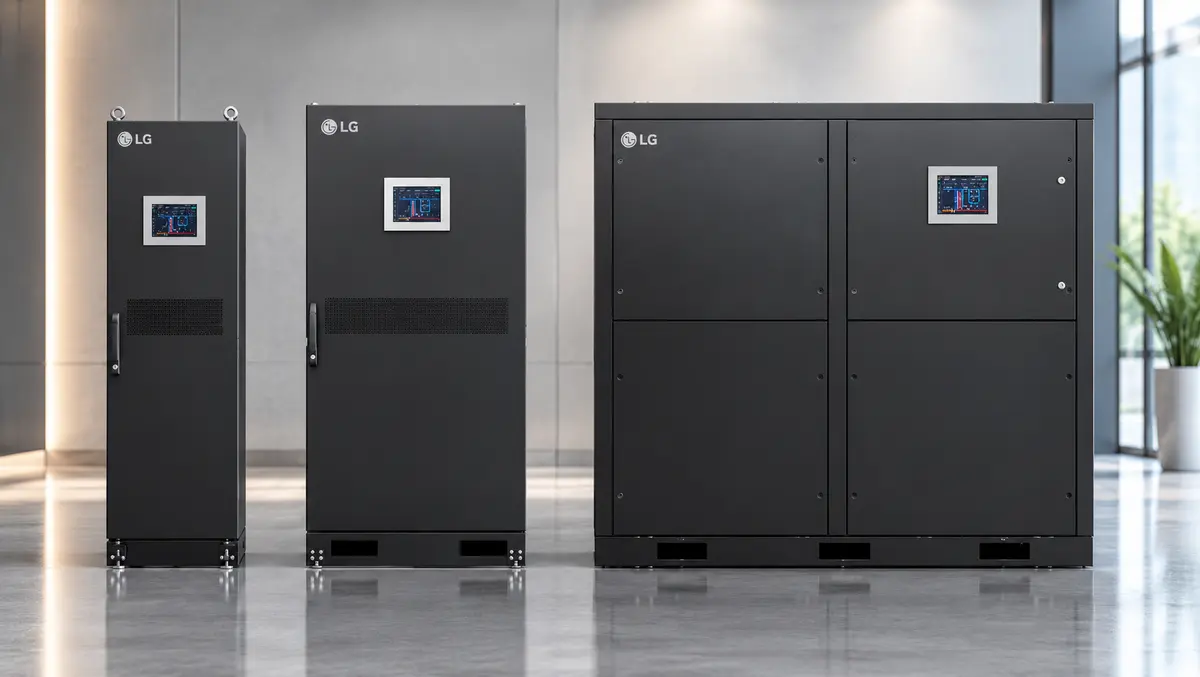
LG's 2.6MW cooling unit wins NVIDIA DSX qualification
Fri, 25th Sep 2026
LG Electronics has qualified its 2.6-megawatt Coolant Distribution Unit as NVIDIA DSX Ready, meaning it meets NVIDIA DSX reference design requirements for AI factory infrastructure.
The qualification builds on LG's existing 600-kilowatt and 1-megawatt Coolant Distribution Unit models, extending its line-up of large-capacity liquid cooling equipment for AI data centres.
It also places the 2.6MW unit on the NVIDIA DSX AI Factory Marketplace, marking LG's latest step in a segment where demand is rising as AI systems consume more electricity and generate more heat. Data centre operators are increasingly looking for centralised cooling systems that can manage multiple high-density server racks, rather than relying solely on equipment at the individual rack level.
A Coolant Distribution Unit is a core part of a direct-to-chip liquid cooling system. It circulates coolant through cold plates to remove heat from processors and graphics chips, then transfers that heat into the wider cooling infrastructure of a data centre.
LG's 2.6MW model is intended for large-scale AI server clusters with substantial thermal loads. It is designed to support more efficient use of data centre space while helping operators maintain continuity as compute density rises.
Cooling demand
The qualification reflects a broader shift in data centre design, driven by more powerful AI accelerators, including NVIDIA Blackwell systems, which are pushing rack power density into the hundreds of kilowatts. That increase has changed the economics and engineering of cooling, making liquid-based systems more common in facilities built for AI training and inference workloads.
Research cited by LG from TrendForce suggests liquid cooling penetration for AI chips will rise from 14 per cent in 2024 to about 60 per cent by 2027. The forecast highlights how quickly operators are moving away from air-only approaches as heat loads climb.
For equipment suppliers, the trend has triggered a race to provide infrastructure that can support larger AI hardware clusters. LG is positioning the 2.6MW system as part of a broader range that spans smaller and larger deployments, with NVIDIA classifying the latest product as a large-scale solution.
Broader portfolio
The cooling unit is part of LG's "Chip-to-Chiller" portfolio, which brings together several parts of the cooling chain used in AI data centres. Alongside Coolant Distribution Units, the range includes chillers and Computer Room Air Handlers, giving the company a presence across heat removal from the chip level through to facility cooling.
The approach reflects growing demand for integrated designs in AI infrastructure. Rather than sourcing separate parts in isolation, operators often want systems that fit into a wider cooling architecture for large server estates.
LG has now completed infrastructure qualification for its 600kW, 1MW and 2.6MW Coolant Distribution Unit models. The 2.6MW version received the additional qualification required for DSX Ready status.
The NVIDIA DSX AI Factory Platform covers design and operations across compute, networking, power, cooling, facilities and software. Inclusion in that framework could help vendors reach customers building standardised AI factory environments around NVIDIA's design model.
James Lee, President of the LG Electronics Eco Solution Company, commented on the qualification.
"NVIDIA's qualification of our 2.6MW CDU for AI factory infrastructure reinforces our position as a first mover in the next-generation liquid cooling market," said Lee.
"We will continue to supply AI data centre operators with highly reliable, in-house developed cooling solutions from our comprehensive Chip-to-Chiller portfolio," he added.