

Watchdog backs copyright licensing for Australian AI
Tue, 13th Jan 2026
The Productivity Commission has backed licensing as the main route for artificial intelligence developers to access copyright-protected creative works in Australia, instead of a new exception in copyright law for text and data mining.
Music rights organisation APRA AMCOS said the Commission's final report on data and digital technology supported the case that AI companies should negotiate licences with rights holders. The report recommended the Australian Government monitor how AI licensing markets develop rather than introduce a text and data mining exception, and it found it would be "premature to make changes to Australia's copyright laws".
"The Commission has recognised what the creative sector has argued for over two years, that licensing of creative copyright content provides the pathway for AI development while ensuring creators are fairly compensated," said Dean Ormston, CEO, APRA AMCOS.
APRA AMCOS said it expected AI licensing deals to expand across different parts of the creative economy. It also said the Commission had cited evidence that licensing arrangements are emerging across multiple jurisdictions.
Policy direction
The Commission's position lands amid ongoing debate about how AI models use text, audio and images during training. Rights holders have argued that developers should secure permission and pay for copyrighted inputs. Some technology firms and business groups have pushed for broader permissions, including proposals that frame training as "non-expressive use".
APRA AMCOS said those proposals still amounted to arguments for use of creative works without payment.
"Licensing markets are developing across multiple sectors, demonstrating that innovation and creator rights can coexist when there is consent, credit and compensation," said Ormston.
Indigenous rights
The Commission's report also discussed the impact of AI on Indigenous Cultural and Intellectual Property. It referenced the Commission's earlier recommendations from 2022 on strengthening legal protections for Aboriginal and Torres Strait Islander cultural assets.
"We welcome this acknowledgment and continue to call for urgent government attention to the digital dimensions of ICIP protection," said Ormston.
APRA AMCOS said Aboriginal and Torres Strait Islander creators and their communities faced distinct risks in the AI era. The organisation called for policy and legislative responses that deal with those issues.
"Aboriginal and Torres Strait Islander creators and their communities face unique challenges in the AI era that require comprehensive policy and legislative responses," said Ormston.
Negotiation stance
APRA AMCOS said it had not seen enough willingness from technology and business interests to enter licensing talks with rights holders, despite the policy signals on copyright exceptions. It said some groups continued to seek legal change.
"Licensing creative works is a simple cost of doing business, but what we're seeing is continued resistance to the fundamental value exchange at the heart of copyright law," said Ormston.
"Both the government and now the Productivity Commission have made clear that licensing is the appropriate pathway. Yet rather than coming to the table to negotiate, some companies continue to lobby for legal changes that would allow them to avoid paying for the content that powers their AI systems. It's just more of the delaying tactic which is undermining the government's attempt to foster innovation," said Ormston.
Transparency debate
The Commission also raised concerns about transparency obligations that would require AI developers to disclose their training datasets. APRA AMCOS criticised that position and argued that it left creators with the burden of discovering whether their works had been used without authorisation.
"It's past time for AI developers to take responsibility for the intellectual property they are copying and ingesting," said Ormston.
"The onus should not be on thousands of individual creators to somehow detect whether their works are buried in training datasets. AI companies know exactly what they've used and they should be required to disclose it.
"Without transparency, copyright holders cannot determine if their works have been used without permission, cannot enforce their rights and cannot negotiate licences. You cannot have a functioning licensing market when one party deliberately obscures what they've taken," said Ormston.
Infrastructure spending
APRA AMCOS pointed to the scale of investment linked to AI development. It said Australia had the second-highest concentration of data centre investment globally after the United States, with billions being spent on construction, electricity and water infrastructure.
"AI companies understand the need to pay for physical infrastructure including construction, electricity and water," said Ormston.
"Creative content is equally essential infrastructure for AI systems. You cannot build these technologies without the works created by human artists, writers, composers and journalists. If it's appropriate to pay for one type of essential input, it's appropriate to pay for the other," said Ormston.
Monitoring period
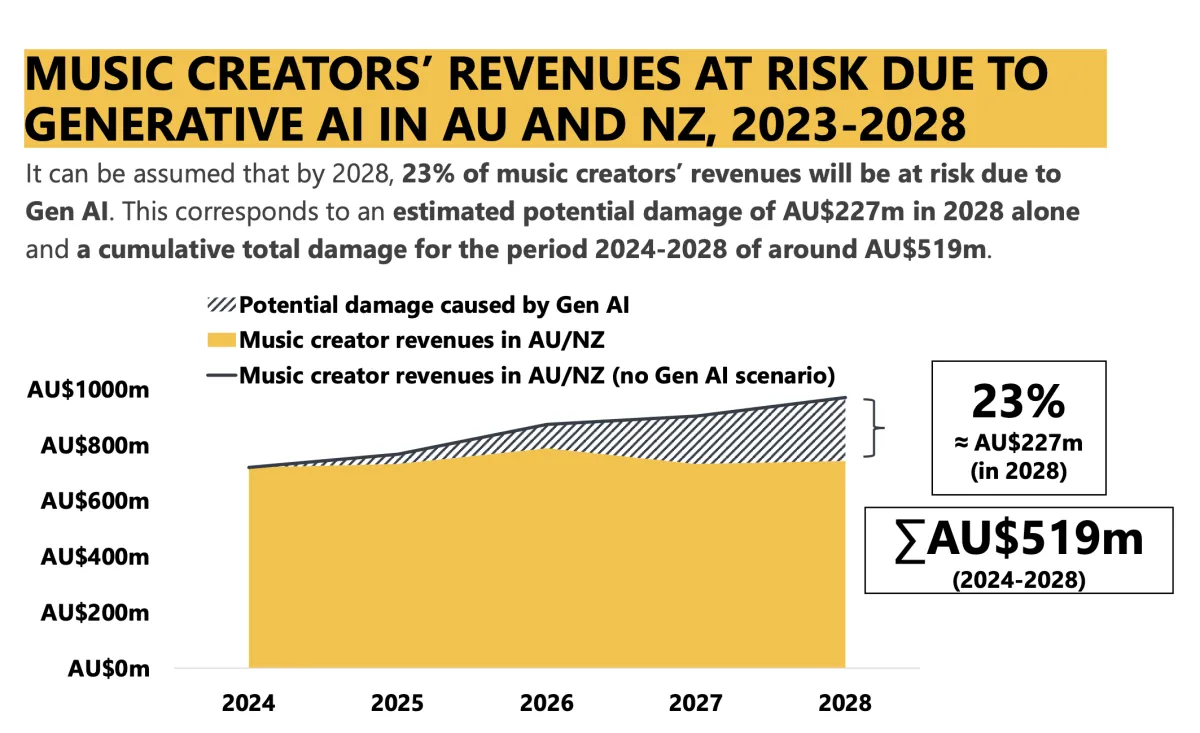
The Commission recommended a three-year monitoring period. It said the review should track licensing market development, the effect of AI on creative incomes generated by copyright royalties, and how overseas courts interpret AI-related copyright exceptions.
APRA AMCOS said that window should prompt more licensing talks. It also called for the Australian Government to examine tax rebates or other incentives for AI startups that seek to license copyrighted materials.
"This monitoring period provides an opportunity to demonstrate what licensing can achieve," said Ormston. "The creative sector stands ready to work with AI companies on licensing arrangements that enable innovation while ensuring fair remuneration. What's needed now is willingness from businesses to come to the table in good faith," said Ormston.