

Young engineers find automation careers in horticulture
Tue, 3rd Nov 2026 (Today)
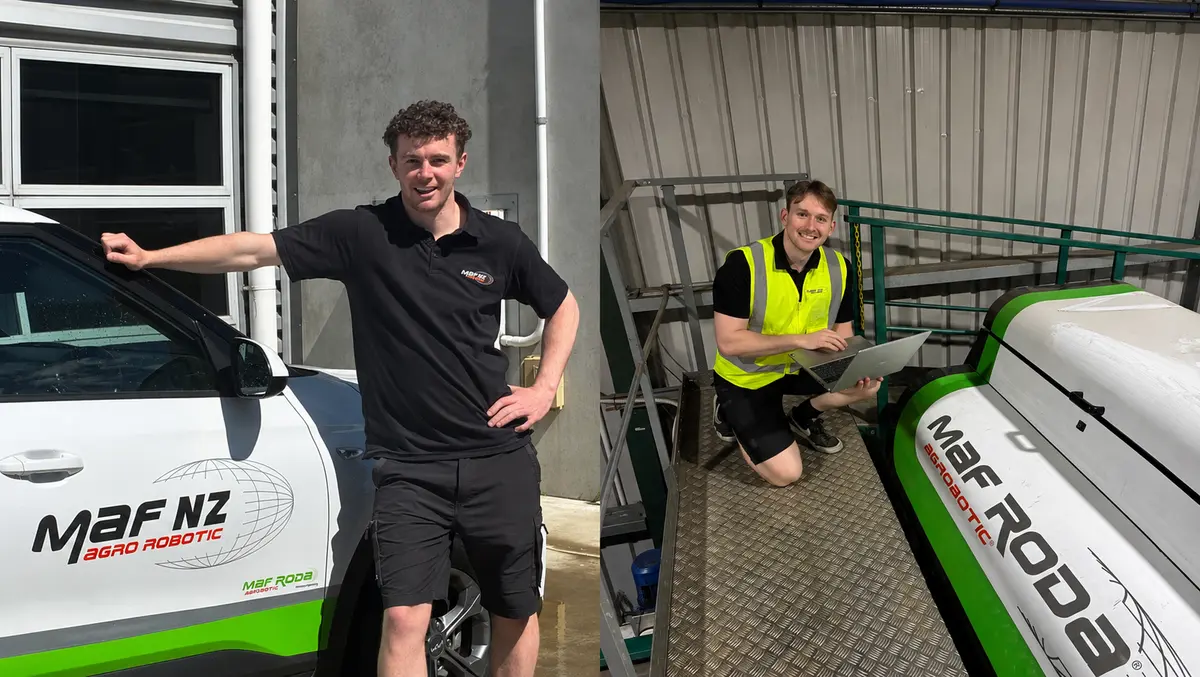
MAF NZ has hired two recent mechatronics graduates as automation engineers in New Zealand's post-harvest sector.
The appointments highlight concerns about how young engineers discover jobs in a growing area of horticulture technology.
Ben Tortoiseshell and Ben McNabb both moved into automation work after time in packhouses, rather than through direct university recruitment into the sector. Their experience points to a gap between the needs of horticulture businesses and how visible those roles are to engineering students.
Post-harvest operations are becoming more automated as growers and packhouses adopt cameras, robots and software to grade and pack fruit once handled manually. That shift is increasing demand for engineers who can design, program and maintain those systems.
The wider economic backdrop is also significant. The Ministry for Primary Industries has forecast horticulture export revenue of NZD $9.5 billion for the year to June 2026, while the industry is aiming to double farmgate value by 2035.
Tortoiseshell, 22, is less than a year out of university and has already completed his first project from start to finish. He reviewed electrical drawings, wrote control and safety programs, set up operator screens, and commissioned a peach grader in Central Otago.
His route into the sector began with school holiday work in a Bay of Plenty packhouse, arranged through his brother, an orchard manager. There he saw one of the first robotic tray packers in operation and later contacted MAF NZ as he finished a mechatronics degree at the University of Canterbury.
McNabb, 24, grew up in Wanaka, also studied at Canterbury, and spent summers working in a cherry packhouse outside Cromwell. When an automation role became available, he said it matched both his experience and his career goals.
Skills gap
Both men said university students are often unaware that post-harvest automation is a possible engineering career. Tortoiseshell said exposure often depends on whether someone has happened to work in a packhouse.
"If you walked around a university campus and talked about the big post-harvest automation companies, not a single student would likely know what they do," Tortoiseshell said.
He also pointed to a shortage of practical openings for students. His mechatronics degree required 800 hours of work experience, with half of that hands-on, but he said some students in his year had to delay graduation because they could not complete the required hours.
There are also few obvious opportunities for companies in the field to meet undergraduates, he said. By contrast, sectors not always seen as natural destinations for engineers still maintain a visible presence at careers fairs and networking events.
That matters for smaller specialist employers as much as for the broader industry. Summer jobs, internships and graduate programmes can provide early entry points, but smaller firms cannot always afford to offer them.
McNabb said temporary placements can have an effect beyond the student involved. "Everyone goes back to uni and talks about what they did that summer. That's how I found out a lot about what's out there," McNabb said.
He described summer students as "quite effective advertising" and said support for smaller businesses could help widen awareness among engineering cohorts.
Training routes
The industry's interest in workforce development is also reflected in Horticulture New Zealand's election manifesto, which calls for investment in education and training pathways for horticulture, including technology, agronomy and post-harvest skills.
Tortoiseshell said support should focus on what he called "footholds" for younger workers. These include paid internships, summer work and formal graduate programmes that allow students and recent graduates to gain experience inside packhouses and related engineering businesses.
One option raised in discussion about recruitment is whether government-backed internship support could be broadened to include more horticulture firms, including those without formal research and development programmes.
Early responsibility
Both engineers said rapid learning depends on being trusted with meaningful work early in their careers. Tortoiseshell described a workplace culture in which senior colleagues expect junior staff to work through problems and learn from mistakes.
"They'll make you think about it and go away, make mistakes, and then help you from there," Tortoiseshell said.
McNabb made a similar point about responsibility in junior roles. "So much quicker," McNabb said.
The role also offers a lifestyle that may help retain staff in New Zealand. McNabb was assigned to a Central Otago project close to family and ski fields, while both men said the seasonal rhythm of the work leaves quieter periods after peak harvest demand.
Tortoiseshell said staying in New Zealand also has financial advantages, including the ability to repay a student loan without interest. He added that some graduates from his year had moved to Australia for mining-related engineering jobs, even though he believes the work available in horticulture compares well.
Chris Bray, Business Development Manager at MAF NZ, linked the hiring challenge to broader changes in the sector. "AI, tech and data are changing the post-harvest space, which is a platform for New Zealand. As a global leader in robotics and automation, our company hires and tries to retain top local talent," Bray said.