Digital Skills stories
More than a third of New Zealand workers feel guilty about using AI, as businesses lag peers in adopting it, a report says.
Australians seeking cyber security jobs face costly certification hurdles and vague entry rules, leaving employers short of qualified applicants.
Wider use of AI is raising fresh concerns over security, skills and ROI as businesses race ahead of governance and controls.
Weak data and governance are leaving most UK mid-market AI projects stuck in pilots, despite 91% of firms saying they are ready to scale.
AI hiring is spreading unevenly across revenue teams, with senior roles and Sydney adverts most likely to mention the skill.
Businesses should treat AI like a new hire, as weak oversight could expose sensitive data and leave staff needing fresh skills to stay relevant.
IT staff can now automate company-specific device fixes in plain language, cutting the need for specialist coding and speeding deployment.
Most Australian employees using AI say it lifts productivity, but many still hide that use from bosses as workplace rules lag behind adoption.
The appointment comes as employers demand more trusted proof of AI and digital skills, and CompTIA seeks broader reach beyond IT roles.
Many workers are being left to learn AI on their own, with junior staff far less confident than senior leaders, a survey shows.
Skills shortages are delaying IoT roll-outs as firms expand abroad, with 60 per cent of decision-makers citing expertise gaps.
Irish firms risk falling further behind as GPT 5.6 outpaces their ability to retrain staff, redesign workflows and justify AI spend.
Nearly two-thirds of UK employers say AI is reshaping hiring, with entry-level candidates now judged more on digital skills than experience.
More than half of UK workers still lack basic digital skills, making AI literacy a growing hiring priority for employers.
The state is seeing jobs and seller sales boost from the retailer's logistics, cloud and community spending since 2010.
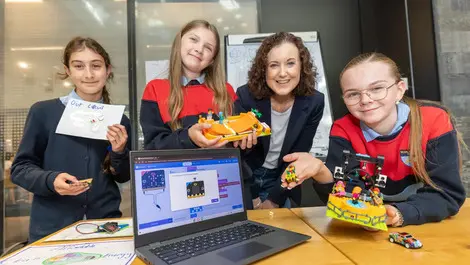
More than 500 pupils from 15 schools have presented STEM and AI projects in Dublin, as Microsoft links its data centre footprint to local education.
More than half of Gen Z staff feel guilty using AI at work, as a new survey found many Canadians hide its use from employers.
A new survey shows Singapore businesses are more prepared than peers to absorb supply shocks, with 23% able to run for up to six months.
The province found hidden security flaws in public sector systems in hours, a task officials say could have taken a manual review 6.5 years.
Only a third of Irish organisations have a formal AI strategy, leaving boards scrambling to align rapid adoption with governance and returns.