

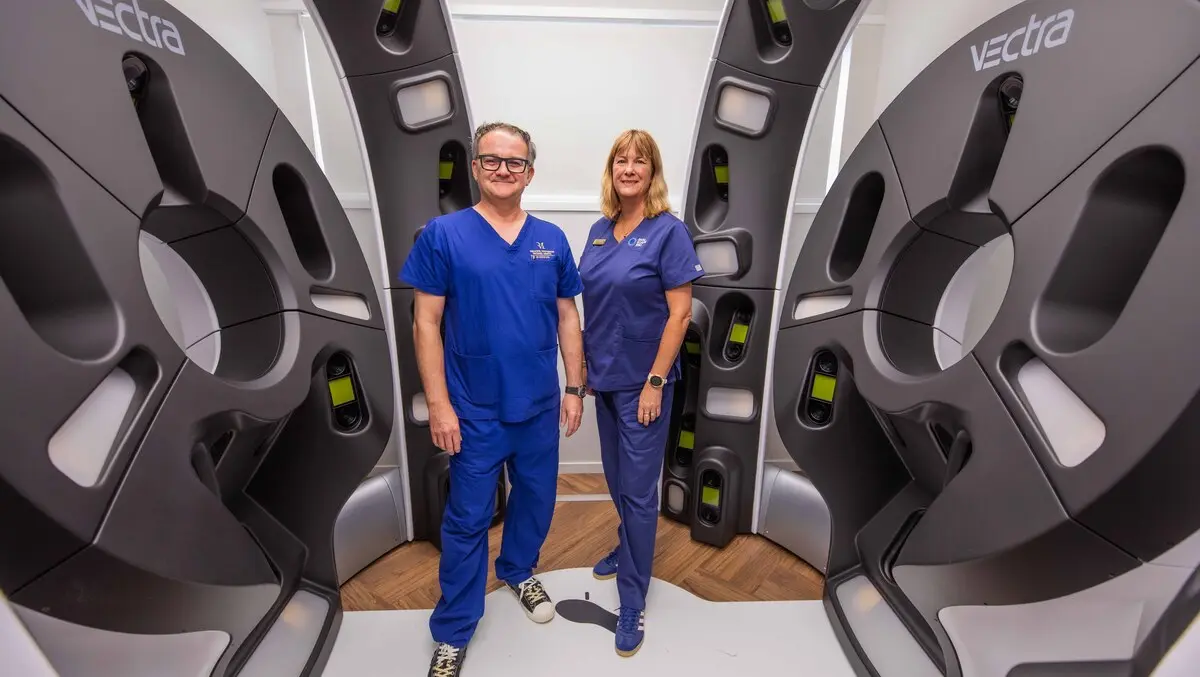

Skin cancer specialist and surgeon Associate Professor Richard Martin has launched Skinscape 360 in New Zealand, introducing what he describes as the country's first Vectra WD 360 whole-body imaging system for melanoma screening and surveillance.
The service uses a booth-style scanner with 92 high-definition cameras to capture images of the entire skin surface in less than a second. It then generates a high-resolution 3D digital avatar of the patient's body, which clinicians use to map moles and lesions over time.
New Zealand has among the highest melanoma rates internationally and records close to 100,000 skin cancer diagnoses each year, according to figures cited by the clinic. Martin is positioning the new approach as a shift in how clinicians document the full body surface and track changes across multiple visits.
How it works
Skinscape 360 centres on whole-body photography to create a baseline record. Follow-up scans allow clinicians to compare images and identify new lesions or changes in existing moles.
According to the clinic, the workflow combines advanced photography with artificial intelligence to flag subtle differences that may be missed with traditional visual checks and standard two-dimensional photography.
The 3D avatar is intended to provide a permanent skin record that evolves with the patient. Scan results can also be shared with a patient's GP, dermatologist, or specialist for ongoing care.
Martin linked the launch to the scale of skin cancer harm and the importance of early diagnosis. "New Zealand should lead the world in early detection and prevention, not grim statistics. Early detection saves lives and has the potential to change the course of melanoma in New Zealand," he said.
Costs and access
Skinscape 360 operates from a clinic in Takapuna, Auckland, and is open to public bookings, according to the clinic.
Pricing is NZD $349 for a full-body digital scan, or NZD $449 for a scan plus an in-person consultation with a dermoscopist. The clinic said the pricing aligns with existing two-dimensional skin screening clinics in the market.
The service is not currently covered by health insurance because it is the first of its kind in New Zealand, the clinic said. Martin said he is in discussions with insurers about coverage and access.
In addition to Martin, consultations and scans can be booked with Chief Dermatoscopist and Clinical Photographer Clare Gunn, according to the clinic.
Economic pressure
Skin cancer carries a material cost burden for the health system and for employers through time away from work. The clinic cited an estimate of NZD $494.92 million as the cost of skin cancer in New Zealand last year.
Martin said earlier detection could reduce downstream treatment costs, including those associated with unnecessary procedures. "Skinscape 360 sets the gold standard for early detection. If we see more, we cut less and protect more. High-resolution 3D mapping reduces unnecessary biopsies which are a significant hidden cost in the health system. Knowing exactly where a lesion is and how it has changed will lead to more efficient, less invasive surgeries, reducing hospital stay times and recovery costs," he said.
The clinic also pointed to prevention and early treatment as central to reducing mortality, citing widely used public health messaging that many skin cancers are preventable and survival rates improve markedly when melanoma is diagnosed early.
Market context
Whole-body imaging systems have been adopted in several overseas markets, including Australia, the US, the UK, and parts of Europe, according to the clinic. Martin said access constraints in New Zealand have made it harder for some patients to secure specialist appointments in a timely way.
"Kiwis deserve access to the same world class skin cancer screening that is available in Australia, USA, UK and Europe. It can be difficult to get an appointment with a GP, dermatologist or specialist, with patients often waiting months. We want to make this system accessible to as many people as possible," he said.
Skinscape 360 currently has a single Vectra WD 360 system in Takapuna, but Martin signalled plans for a wider rollout. "For now, we have the one imaging system at our clinic in Takapuna, but anyone can book a consultation and scan with our Chief Dermatoscopist and Clinical Photographer, Clare Gunn. Our hope is to bring Skinscape 360 to our other major cities in the near future so even more people can take advantage of this cutting edge technology," he said.