

TeamViewer utilising AI to cut costly digital friction
Fri, 8th May 2026
As the needs of businesses regarding remote working capabilities continue to grow and become more complex over time, TeamViewer's products are also evolving.
While the adoption of AI within many organisations has brought challenges, it has also led to mass improvements in workflows and efficiency, as well as replacing cumbersome and frustrating IT tickets that workers were reluctant to even open in the first place, with a survey of over 4000 employees spanning multiple industries, roles and countries finding technology issues have brought nine per cent of workers to the point of tears.
Fifty-three per cent of respondents said that digital friction is a key contributor to dissatisfaction in the workplace, and 43 per cent attributed digital friction to feelings of burnout at work. This consternation presents a significant problem, prompting employees to search for DIY solutions to tech issues, often sharing devices with others, which in turn opens up privacy concerns and increases the risk of data breaches.
The survey also showed respondents citing the frustration of digital friction, and their company's response, as a major reason for seeking alternative employment, and 45 per cent said they would ask about digital friction at a job interview.
Telemetry data from a range of devices allows customers to analyse inefficiencies, while also assisting companies with sustainability by monitoring the effective lifespan of devices, delivering savings as still usable devices are discarded and replaced based on an arbitrary span of time.
Embracing the new age of automation, TeamViewer is leveraging self-teaching AI to optimise rudimentary tasks, freeing software engineers and IT professionals to focus on more advanced tasks, with the additional benefit to companies of reduced churn and higher satisfaction amongst the employees that remain because they are not repeating the same task dozens of times per day.
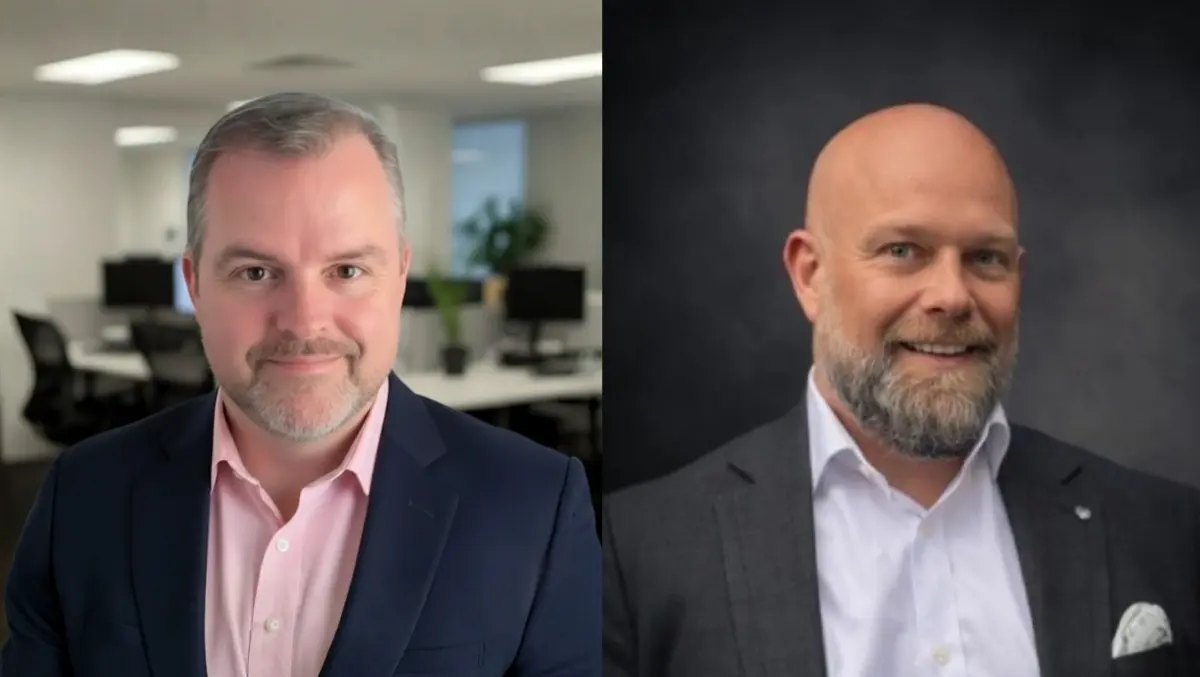
"The average lifespan of a level one support person is typically one to two years. They move on and do other things, right? And there's a part of an IT manager's role that is continually hiring new level one guys to replace the ones that are leaving," said Jason Keogh, Vice President of Solutions at TeamViewer.
"Essentially, if you can generate additional capacity, you don't need, as those people leave, you don't need to hire to replace them. Essentially, you can drive a better user experience while leveraging more automation, and the people that you're left with are the ones that have been there longer, know their business better, and can actually act as engineers.
"A support engineer doesn't want to be doing the same - it's called toil - the same manual repetitive tasks, the seven different tasks that they do 15 times a day for different users, and it just is mind-blowingly boring.
"Now they actually get new and novel, because all that stuff is dealt with by the AI. Now you get the new and novel problems, and you have to actually think to fix them. People enjoy that more. So what do they do? They don't leave."
Partner smart glasses, in concert with the firm's Frontline Assist remote solution, have been a key innovation in the healthcare industry, helping Uniting Healthcare, an aged care provider, to connect their frontline workers with medical experts.
Instead of requiring a doctor in every room of the facility to conduct clinical consultations, the smart glasses allow medical professionals to connect remotely, alleviating skills shortages and achieving significant reductions in resident wait times and hospitalisations, as well as boosting care outcomes in remote and rural areas, where the access to quality clinical care is often compromised.
"We're able to put the glasses on some of those frontline workers, the clinicians that are in there, and then remote back to some of the specialist resources which are back in the CBD locations or other locations, so they're not physically having to travel," Keogh said.
"This is especially important if you need care very quickly, and also it means that through leveraging this technology, you're able to capture a lot more information... the doctor could be 800 kilometres away.
"The nurse says, 'Oh, you've got a nasty infection on your leg, I think we need to get a certain type of doctor for that.'
"In real time, a doctor can literally diagnose. The nurse is looking at this, and they have to request, and then the nurse has to approve. The doctor says, 'I need to take a picture of that for a second,' I want you to stick in an injection, but I need to show you where. Can I take a picture?'
"And she says, 'Yes,' and the verbal yes takes the picture and sends it to the doctor."
Showcasing another application of partner smart glasses used alongside its remote solution, as well as being a team sponsor, TeamViewer has played a role in Mercedes AMG Petronas' return to the top of the F1 championship standings, with Andrea Kimi Antonelli and George Russell pushing for the famous team's first championship since 2021.
Earlier in May, Mercedes upgraded from TeamViewer Tensor to TeamViewer ONE, another tick of approval from one of the world's strongest F1 teams, who rely on data spanning telemetry, weather and communications.
While being potentially thousands of kilometres away from Albert Park or Silverstone, expert engineers are able to work with frontline mechanics trackside to fix mechanical issues that could end up being the difference between one of their drivers finishing on the podium, or leaving a race weekend with zero points.